Untitled Folding Objects (U.F.O.)
Reuven Israel: U.F.O. (Untitled Folding Object) 1329
March 8, 2025 – May 18, 2025
Kinosaito Arts Center, Verplanck, NY
Curator’s Statement
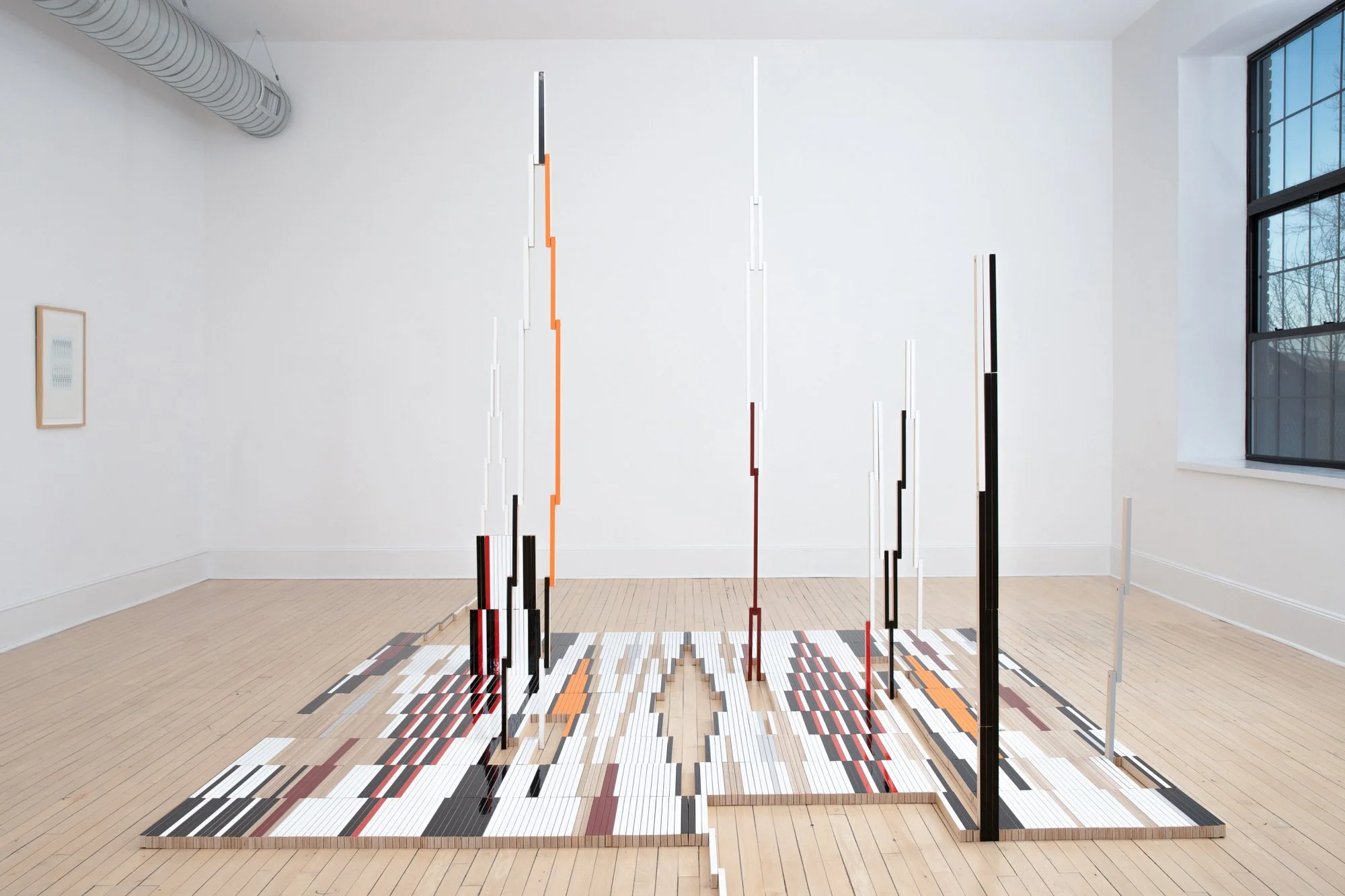
U.F.O. (Untitled Folding Object) 1329 is a solo presentation that consists of a site-specific installation and a series of related drawings by the Brooklyn-based artist Reuven Israel. This exhibition continues the artist’s abiding interest in architecture and sacred spaces’ overlapping and conflicting histories.
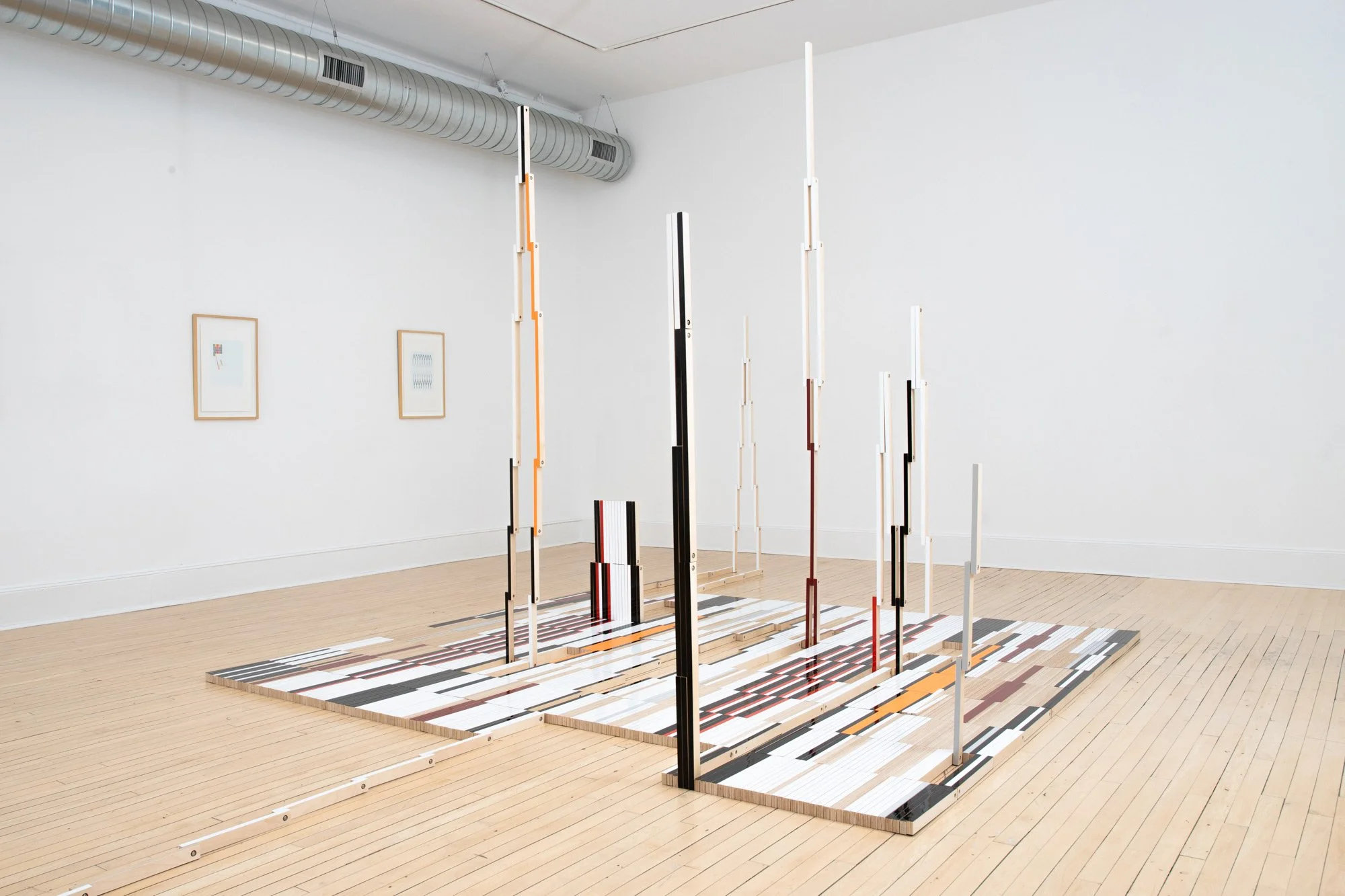
Israel responds to the original structure of the gallery at KinoSaito. Formerly a Catholic school, the room’s height and large, gridded windows are reflected in the composition and scale of the installation, tailor-made to fit the space. Its title, Untitled Folding Object, refers to Israel’s ongoing series of tessellated sculptures. The number 1329 is the amount of individual components it consists of. The artist created 1329 small birch elements for this installation, laminating them with colored PVC edge-banding. Each standard part has the potential to unfold like a thread to form countless configurations within the space. The experience may be considered uncanny as if stepping into a pixelated image or a woven rug – an interconnected, total, and enclosed sculptural environment that holds within itself the tension of its unraveling self-destruction.
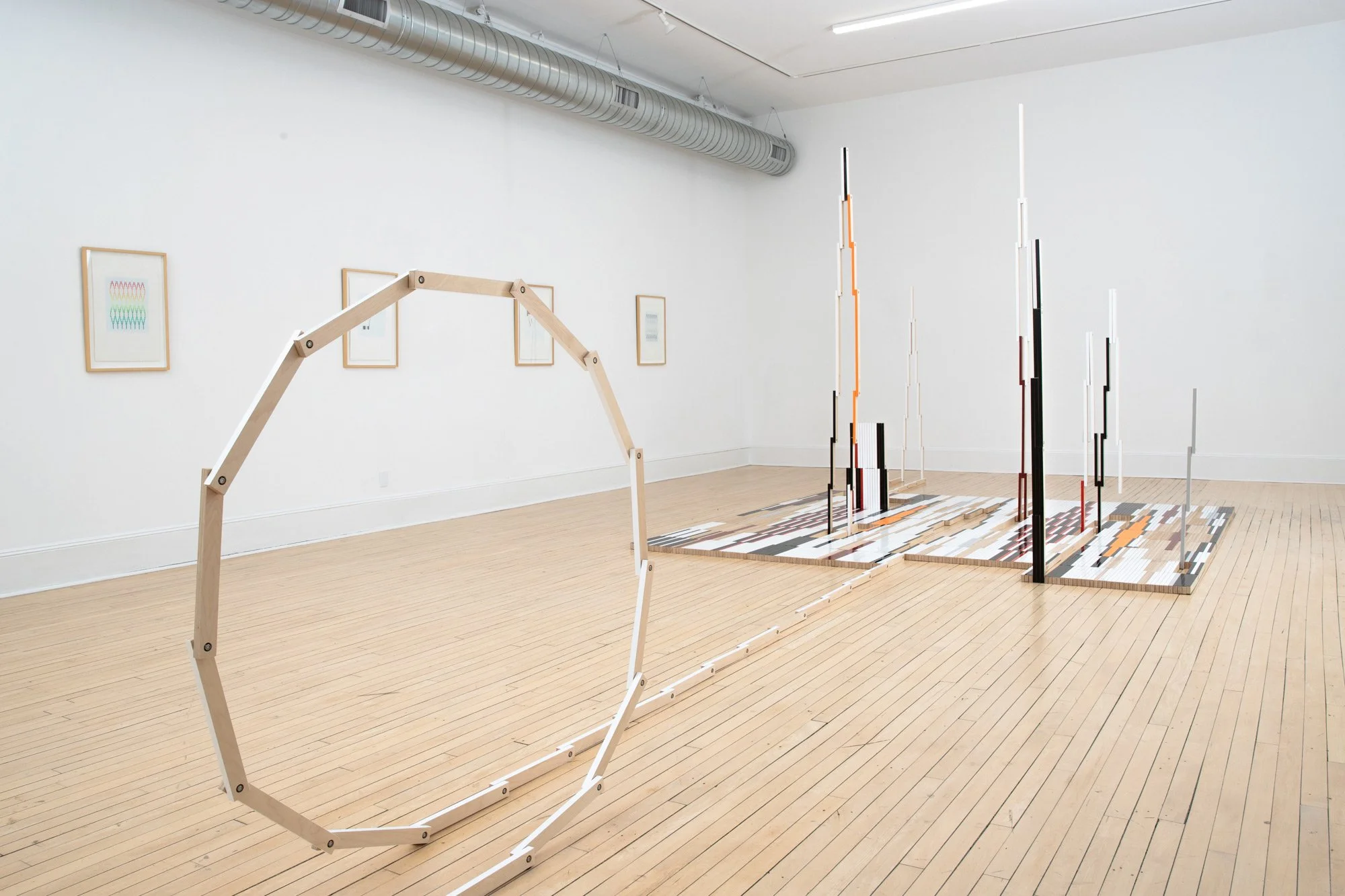
The piece begins as a flat rectangle on the gallery floor, with a diamond-shaped central void inspired by designs of Islamic courtyards (which often feature water at their center). For each unfolding structure, the segments stretch out and expand into three-dimensional space, leaving more swathes of the bare floor where they once neatly fit.
U.F.O. (Untitled Folding Object) 1329, is inspired by early modernist art movements, as well as Navajo and Hopi weaving traditions, Op Art, science fiction, video games, and sacred geometry. While U.F.O. (Untitled Folding Object) 1329 sprawls the length of the space, with visitors able to walk around it, a series of preliminary drawings adorn the gallery walls, inviting viewers in.
–Kathy Battista
Additional Text by Joshua Cohen
Reuven Israel, born 1978, Jerusalem, and working in New York since 2012, is a sculptor of potential utopias, whose works begin below our feet and end, or never end, above our heads as protean soaring skylines. In plain terms, what this sculpture requires is the construction of a floor, which Israel tends to refer to by an acronym, in a previous installation as F.L.O.O.R.: Formulated, Liminal, Oblique, Openable, Rectangles, and in this show as U.F.O., Untitled Folding Object. This is a mat-like object that consists of rectangular wooden segments, some plain, and others colored. Many of the segments that create this tessellation, this abstract mosaic, are moveable: In the current installation, U.F.O. 1329 (the number referring to the sum of the PVC-laminated birch segments), they can be folded out of the superficially 2-D surface that resembles a technologized Oriental textile and raised above to create the impression of abstracted buildings, office-and-residential structures, or animal-like and plant-like towers, which last however long the artist himself might decide, before being folded back — like retractable limbs — into the body. It's this decision-making process — the choice to activate certain parts of this operable rug or carpet, how and for how long — that turns Israel’s often site-specific sculptures into long-duration performances, kinetic experiments in the creation and evolution and eventual devolution and destruction of an imaginary urbs, utopian — in the purest sense — because unpeopled. It strikes me that some of Israel’s inspiration is suggested by his surname — chiefly the socialism of early Zionism, which was a universalizing ideology applied to a parochial ideology like a glossy veneer atop workaday plywood — while his work also points to engagement in traditional Middle Eastern (Arabic and Persian, as well as Jewish) decorative arts, in which ornament and pattern are not background but foreground, all-ground, usurping representation, which is religiously proscribed. There is a mystical principle at work here, wherein the pieces or tiles that contain a latent ability to express themselves or be expressed in erected 3-D become an analogue to the hidden resources of the alphabet, whose individual letters, when combined by a kabbalist, can function mathematically and speak secret wisdom. Reuven Israel is one of the great kabbalists of abstract sculpture.
–Joshua Cohen
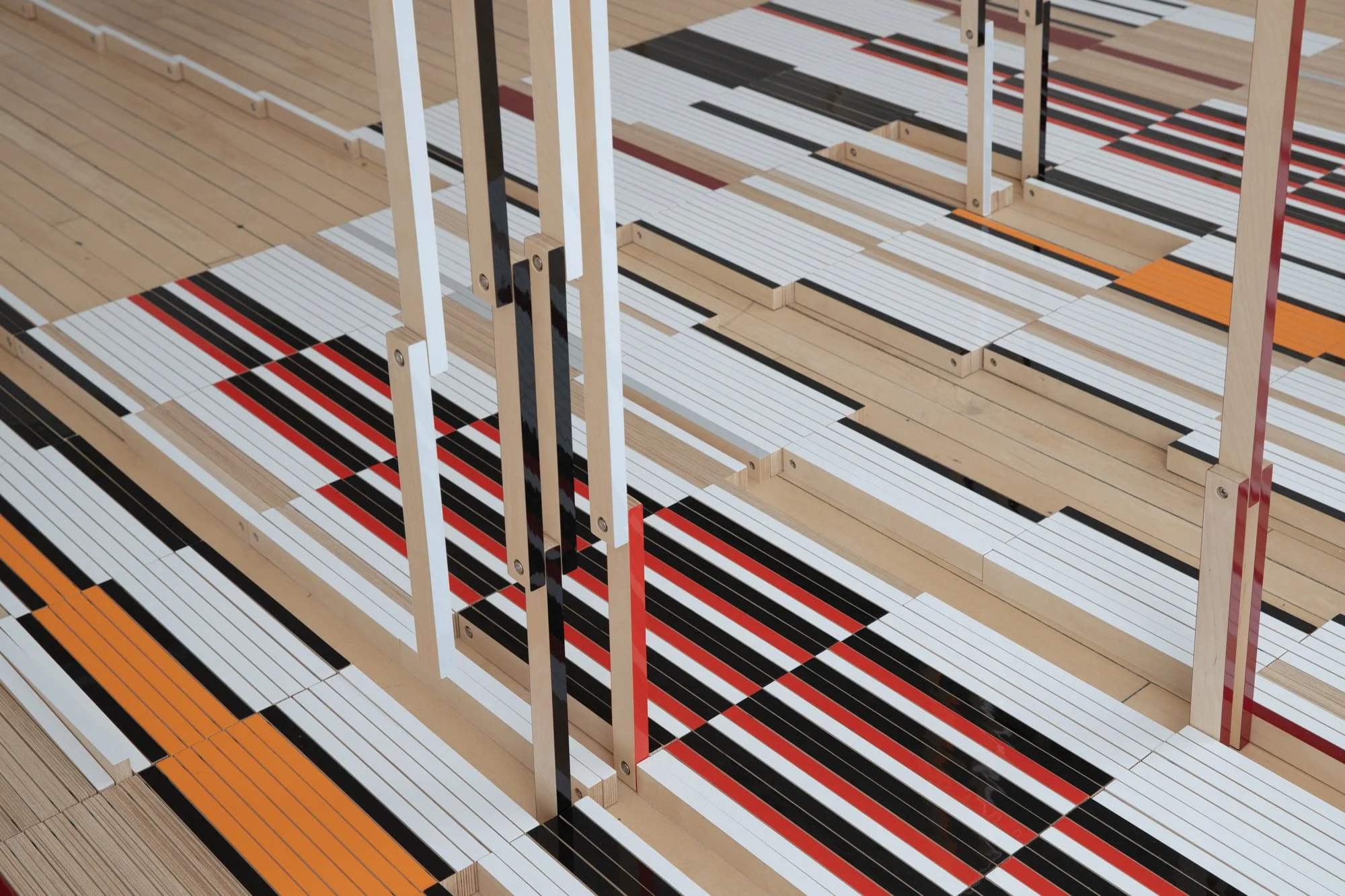
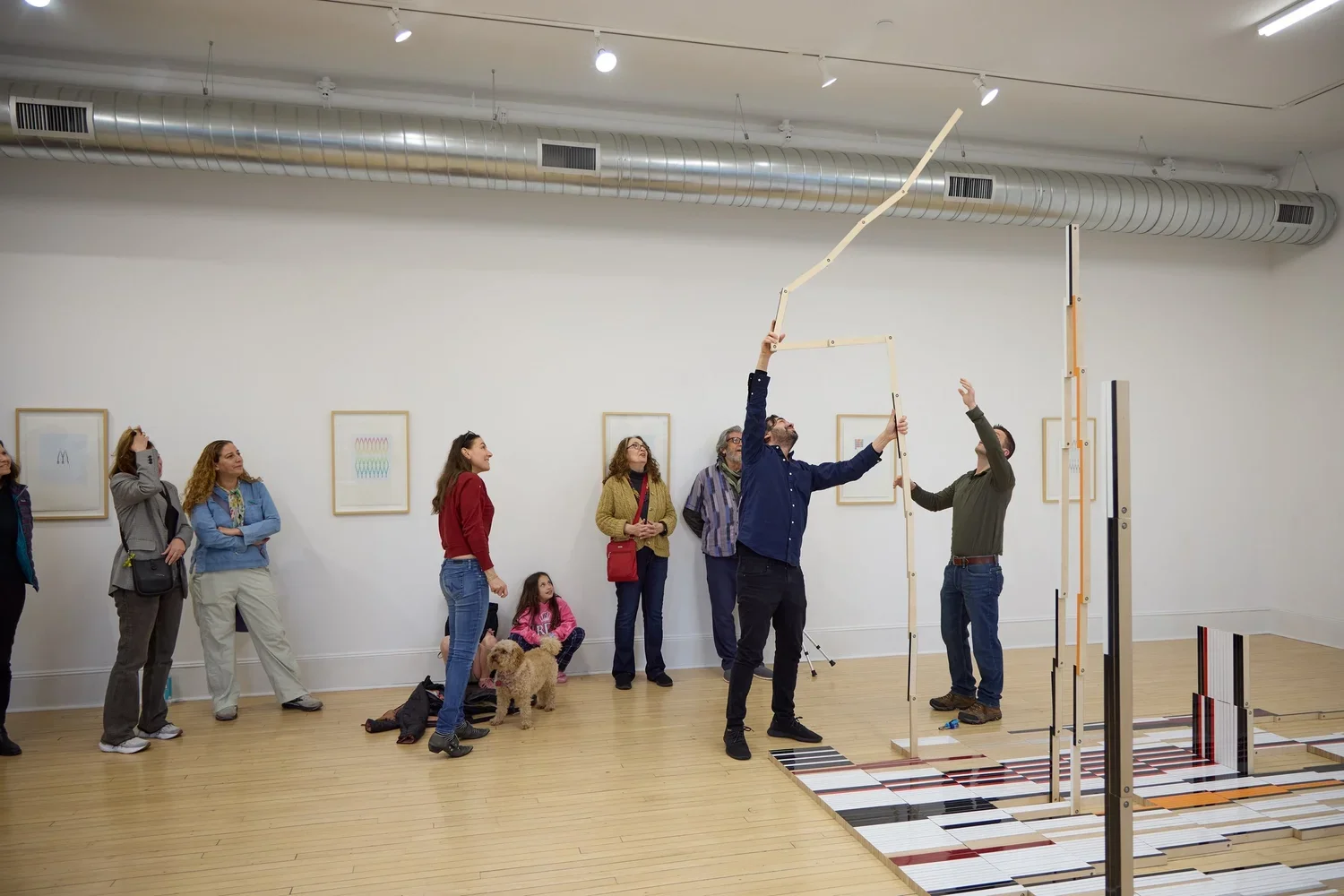
Reuven Israel: U.F.O. (Untitled Folding Object) 1329. Baltic Birch, PVC and brass hardware, installation view at CCA Tel Aviv-Jaffa
Photos by Elisheva Gavra
Performance Photos by Chika Kobari
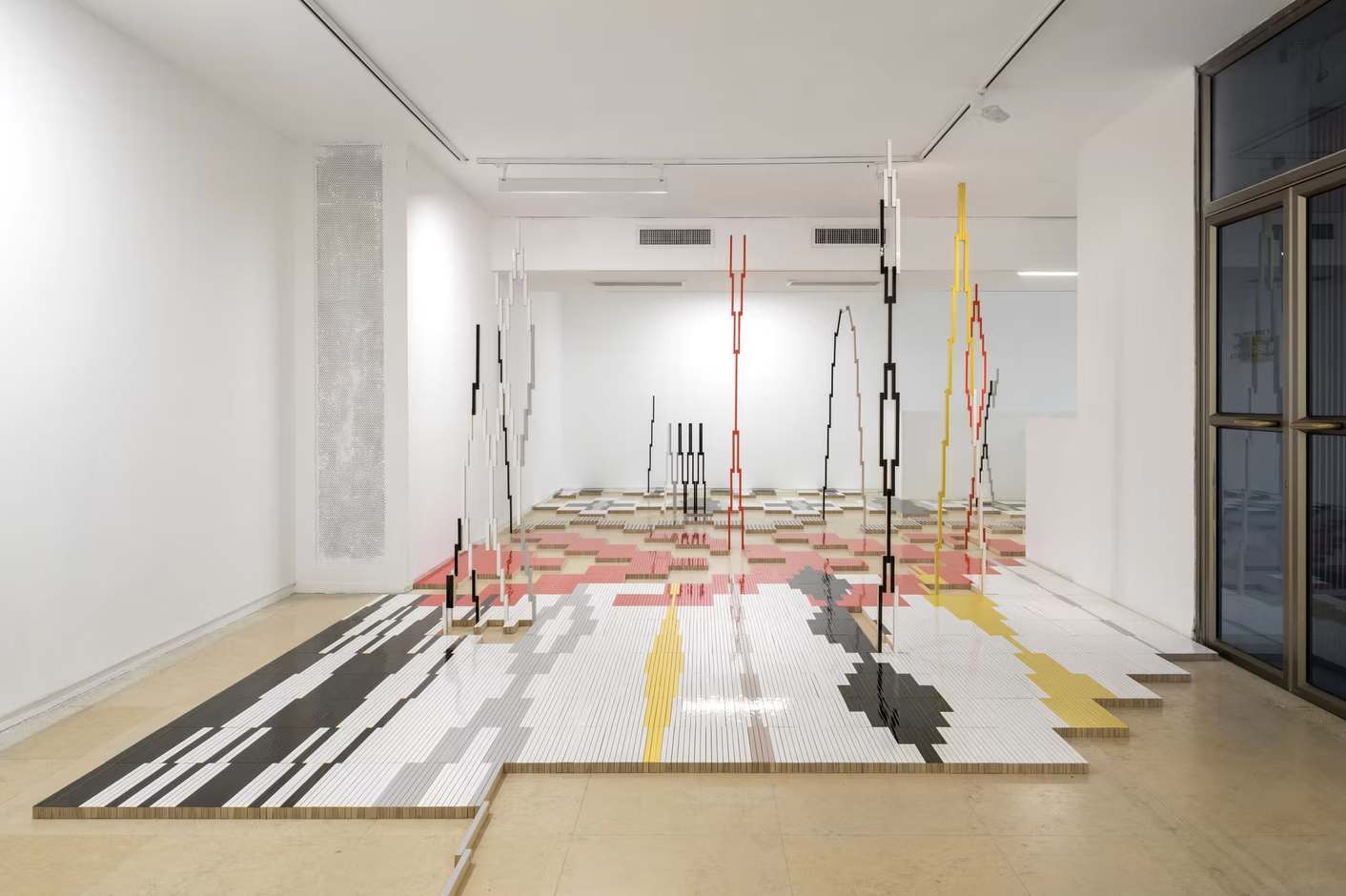
Reuven Israel: F.L.O.O.R. (Formulated, Liminal, Oblique, Openable, Rectangles)
September 29, 2021 – December 31, 2021
C.C.A Tel Aviv
Working within the tradition of sculpture and simultaneously questioning its very essence, Reuven Israel (*1978, Jerusalem; lives and works in New York) is a master of opposite solutions. His work often starts from disparate positions and ideas that he links together to reach an endpoint which conveys a deep sense of visual and conceptual harmony, as if an equilibrium could only be reached through tension. Associating the algid aesthetics of minimal art and Finish Fetish with the playful look of children’s toys, appropriating elements of modern architecture with the visual vocabulary of ancient sites of worship, adopting the legacy of monumental sculpture in order to transform it into modifiable pieces, Israel’s objects represent a unique position in the landscape of Israeli art.
For his solo exhibition at CCA Tel Aviv, the artist conceived a new site-specific sculptural installation commissioned and produced by the Center and tailored for its first floor gallery. The work, entitled F.L.O.O.R. (Formulated, Liminal, Oblique, Openable, Rectangles), consists of thousands of wooden segments laminated in different colors. Tiling the exhibition space, these segments create tessellated geometric patterns that crisscross throughout the gallery, covering most of its floor. To physically enter the heart of the installation, to literally go through the work, visitors are obliged to tread on the locking rows of colorful segments. Unfolding from this tiled floor, multiple sculptural structures sprout up, leaving empty gaps in the tessellated wooden surface, where the pieces of wood once lay. Further advancing into the installation, the tiled floor breaks up into groups of segments creating geometric patterns and leaving swathes of bare floor to complete their negative spaces. On the other side of the installation, joint pieces of wood unravel – stretching across the gallery floor and spiraling into a loop, similar to a loose thread – and untie the work, giving a sense of transient temporality.
Israel explores the notion of “sculpture as place,” coined by artist Carl Andre, and furthers it by presenting sculpture not only as a physical place but as a virtual one as well. The unified wooden components are the standard components of the entire environment holding the potential of countless configurations to emerge into the three-dimensional space. The towering geometric structures resemble people integrated within a place, moving, taking actions, and some are folded back to fit neatly into the tiled floor. Inspired by early modernist art movements, Navajo and Hopi weaving traditions, Op Art, and sacred geometry, the overall experience is somewhat uncanny as if stepping into a pixelated image or a woven rug – an interconnected, total, and enclosed sculptural environment that holds within itself the tension of self-destruction.
“Reuven Israel: F.L.O.O.R. (Formulated, Liminal, Oblique, Openable, Rectangles)” is curated by Nicola Trezzi. The exhibition is accompanied by printed matter in Hebrew, Arabic and English and an artist talk in Hebrew on September 30, 2021.
“Reuven Israel: F.L.O.O.R. (Formulated, Liminal, Oblique, Openable, Rectangles)” is supported by the Philip and Muriel Berman Foundation, Sam Ben-Avraham, Sonia S. Cummings, Giora Kaplan, Thomas Rom, Marc Schimmel, Chaim Zach and the artist’s representing galleries – Braverman Gallery, Tel Aviv, and Nazarian / Curcio, Los Angeles; hospitality provided by Outset Contemporary Art Fund.
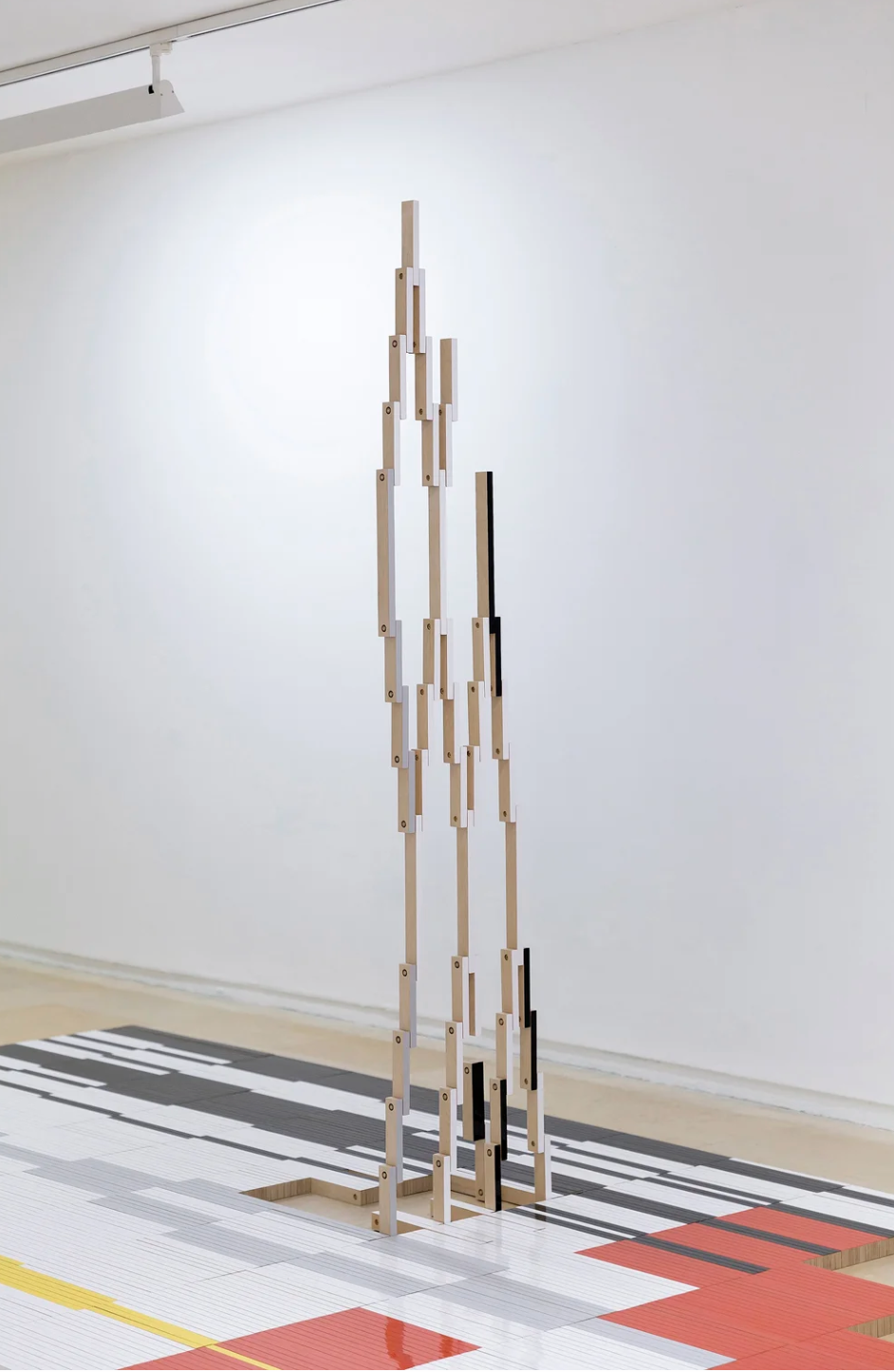
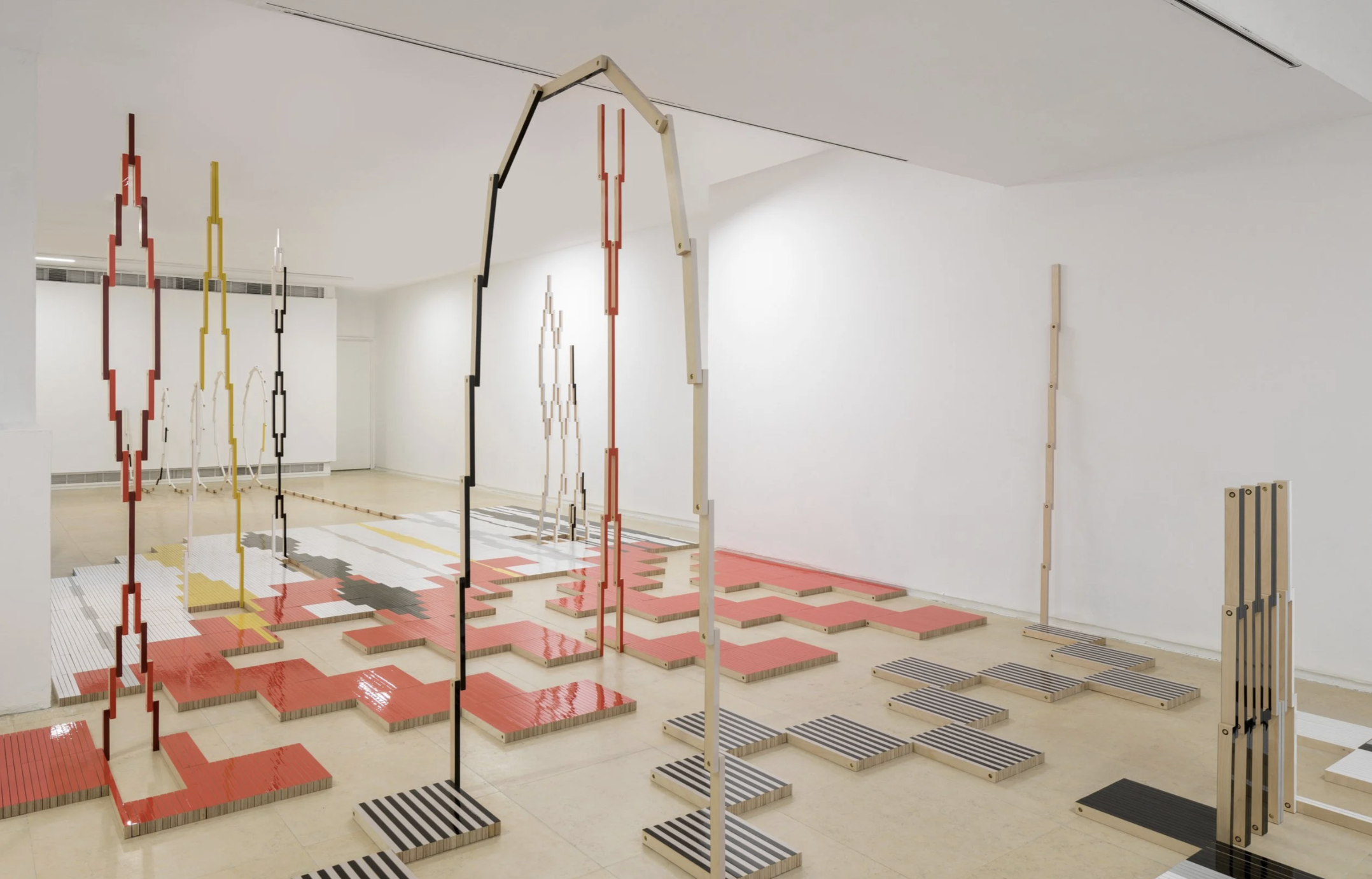
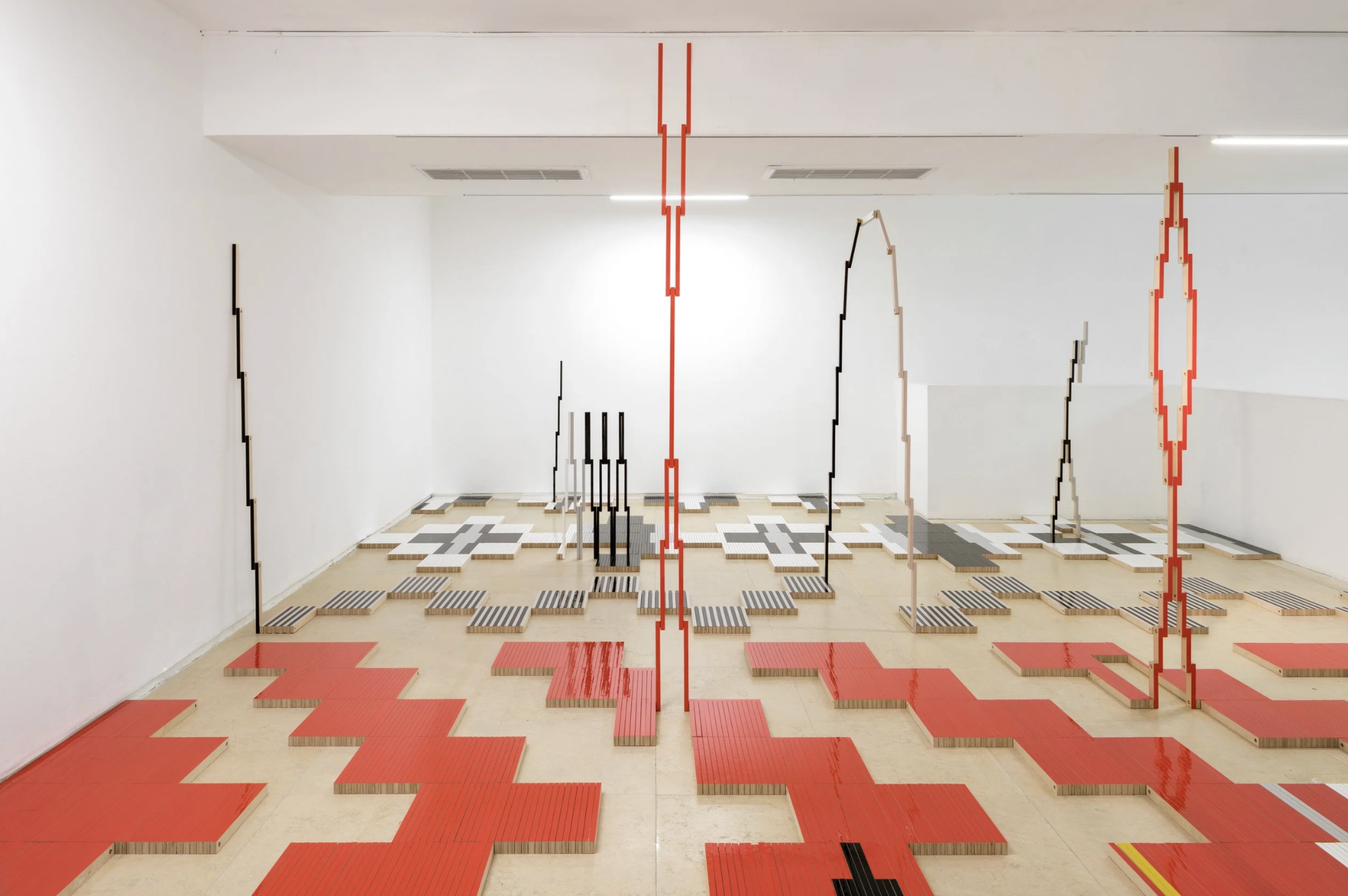
F.L.O.O.R. (Formulated, Liminal, Oblique, Openable, Rectangles), 2021. Baltic Birch, PVC and brass hardware, installation view at CCA Tel Aviv-Jaffa
Source:
Photos by Elad Sarig
Text: cca.org.il/exhibitions/reuven-israel
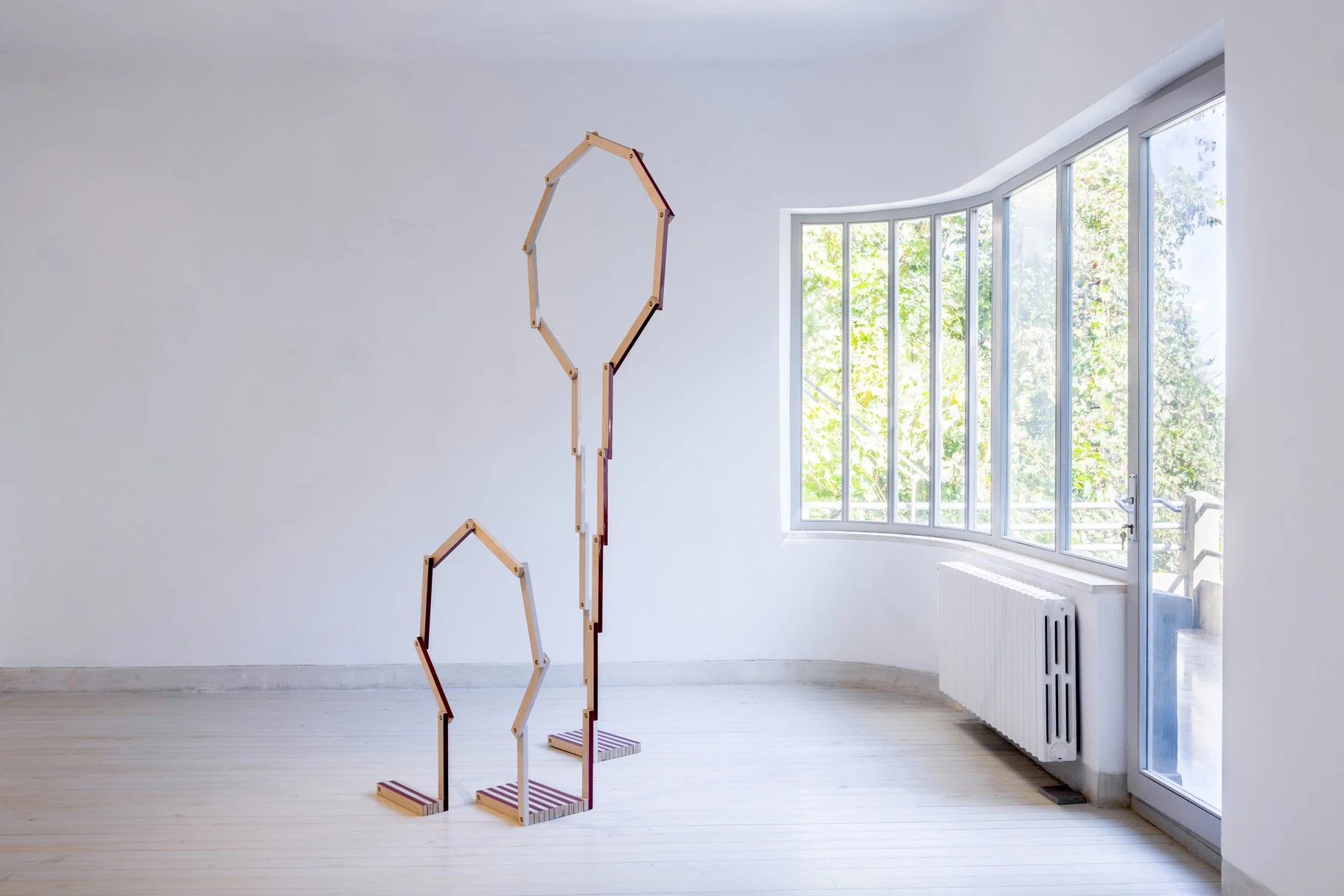
Metamorphosis and Metaphors: A dialogue on minor aesthetics
September 11, 2022 - November 20, 2022
Ark Kültür, Istanbul
Reuven Israel, Ege Kanar, Panos Tsagaris, in dialogue with Elif Kamisli.
Curated by Christian Oxenius
The exhibition “Metamorphosis and metaphors, a dialogue on minor aesthetics” is the first manifestation of a extensive dialogue initiated in the first months of the pandemic. It is a testimony of the discussions and a reflection of the conditions in which these took place (remotely) on possibly one of the most intimate and profound subjects we can approach: an exploration of the self and of our spiritual longing. As a way to compensate for the long hours spent discussing across the slick but cold interface of our screens, the exhibition couldn’t take place anywhere but in a warm and domestic environment such as the one offered by Ark Kültür. It represented for all of us a home to finally meet and bring our thoughts together with the necessary physical presence the subject requires.
With everything the world is witnessing in these past years, how can we stop and think of the basic structures through which we relate to the world, our most intimate tools to build a sense of interest, empathy and community with the universe around us. And more so, how can we do so from the limitations that come from our human condition? Needless to say, the result of these conversations is not a definite answer but a testimony to the complexity with which we approach these questions. It brings together inherently diverging feelings and contradicting positions merging spiritual, psychoanalytical, and scientific interests. It is, in this sense, an occasion to put our intimate sphere out into the open, face to face with one another and continue the dialogue. After two years, in which many of us experienced isolation to a degree not imaginable before, this meeting is also a cathartic moment of re-awakening. It is a much-needed outpour of thoughts and voices in an act of resistance to the atomization of society, which clearly has much longer and complex roots than the current pandemic.
In its current form “Metamorphosis and metaphors, a dialogue on minor aesthetics” therefore can be considered an assemblage of thoughts, forms and rhythms rendering visible and physical the change this research through dialogue produced in us over the course of two years. The title itself introduces some of the themes as well as references used throughout the dialogue. It is a direct reference to Kafka, towards a minor literature by Gilles Deleuze and Félix Guattari and specifically their choice to focus on constructing a project of literary analysis of Franz Kafka’s oeuvre through the lens of his condition as a Jew in Prague using German as his main language. Key here is that German was neither his daily language nor that of the minority he was part of but instead the trade-language at the time. This linguistic choice has profound consequences on how his work is perceived from both the wider public and his own community, putting him in a more atomized position of minority, let’s call this position one of elective minority. This was very much the starting point of many of our discussions as each of us, for their own reasons and dynamics, felt that this image was very much rendering our condition. The other common factor in our early discussions was how to deal change, not in an indirect way – through a metaphor – but in its most essential, alchemic, quality. The materiality of change is a composition of elements brought together in the current manifestation of the exhibition that strengthen our conviction that art and aesthetic research is an often overlooked but key contributing factor to collective research into basic phenomena composing the world around us.
These premises, pushed our collective research and dialogues into an exploration of those intangible elements guiding us in our decisions, steering our subconscious and helping our minds in our continuous story-making effort, effectively building the fabric of the world as we perceive it. Nurtured by our individual interests and researches into philosophy, alchemy, psychology and various branches of spiritual traditions the dialogues became at once intimate and cosmic, universal and personal, religious and political in the realization that none of these dichotomy is truly exclusive and that what we need to strive for, in order to be engaged in true research is a synthesis of all of these in a holistic vision of the world and our position within it.
This exhibition is made possible with the support of ARTIS.
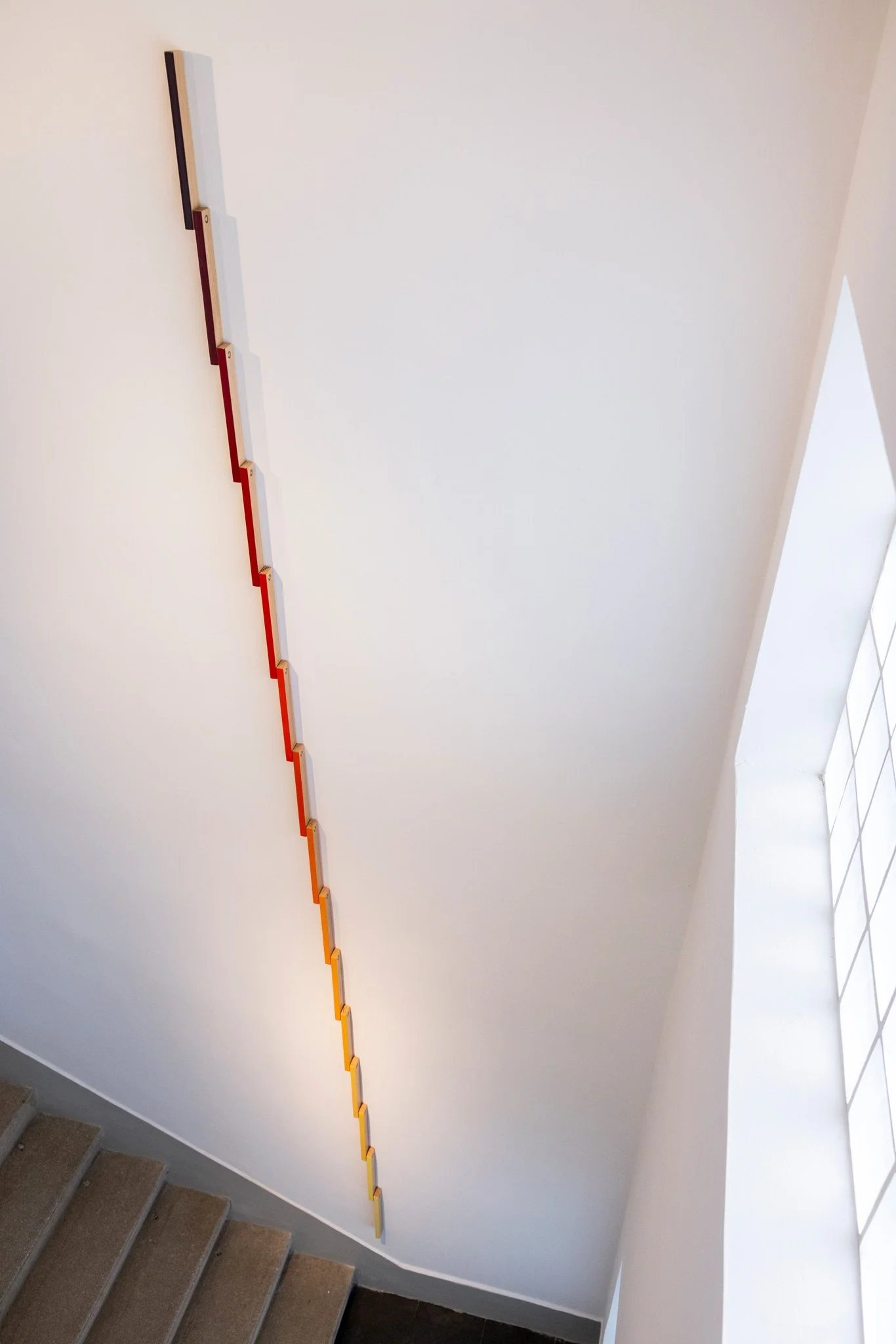
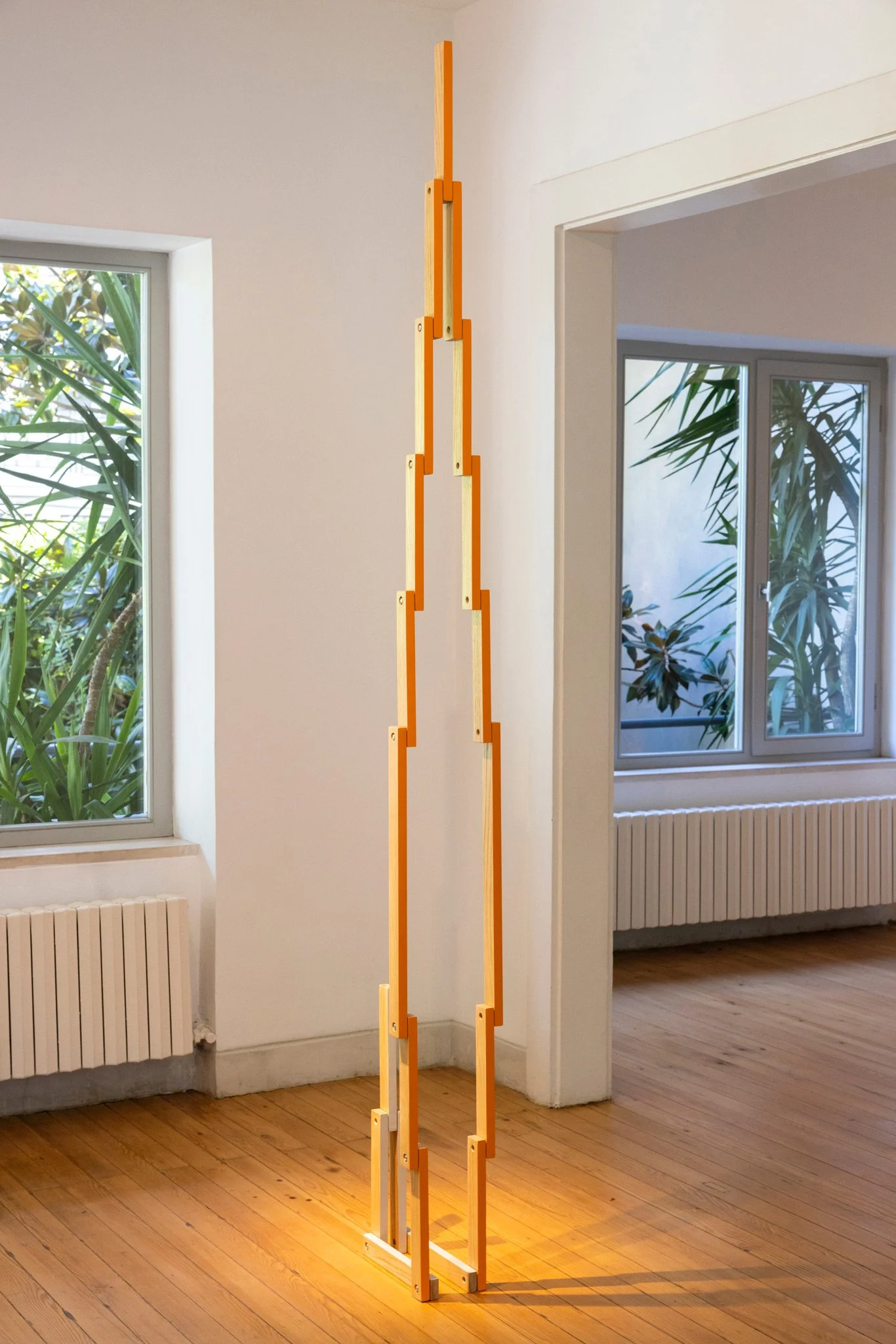
W.A.L.L. (Wooden Arrangeable Linear Lamellation)
September 18, 2021 - October 30, 2021
Nazarian / Curcio, L.A.
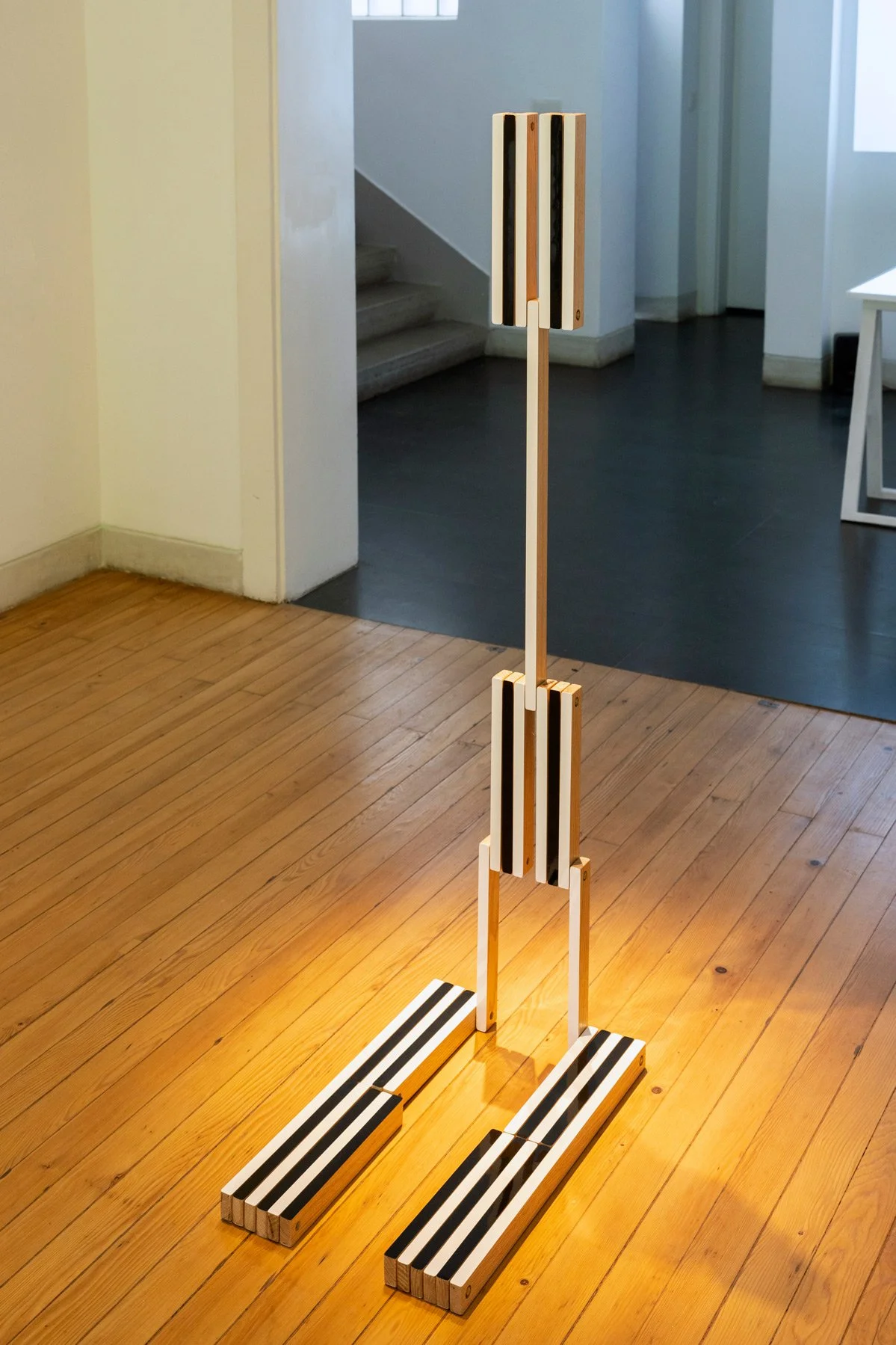
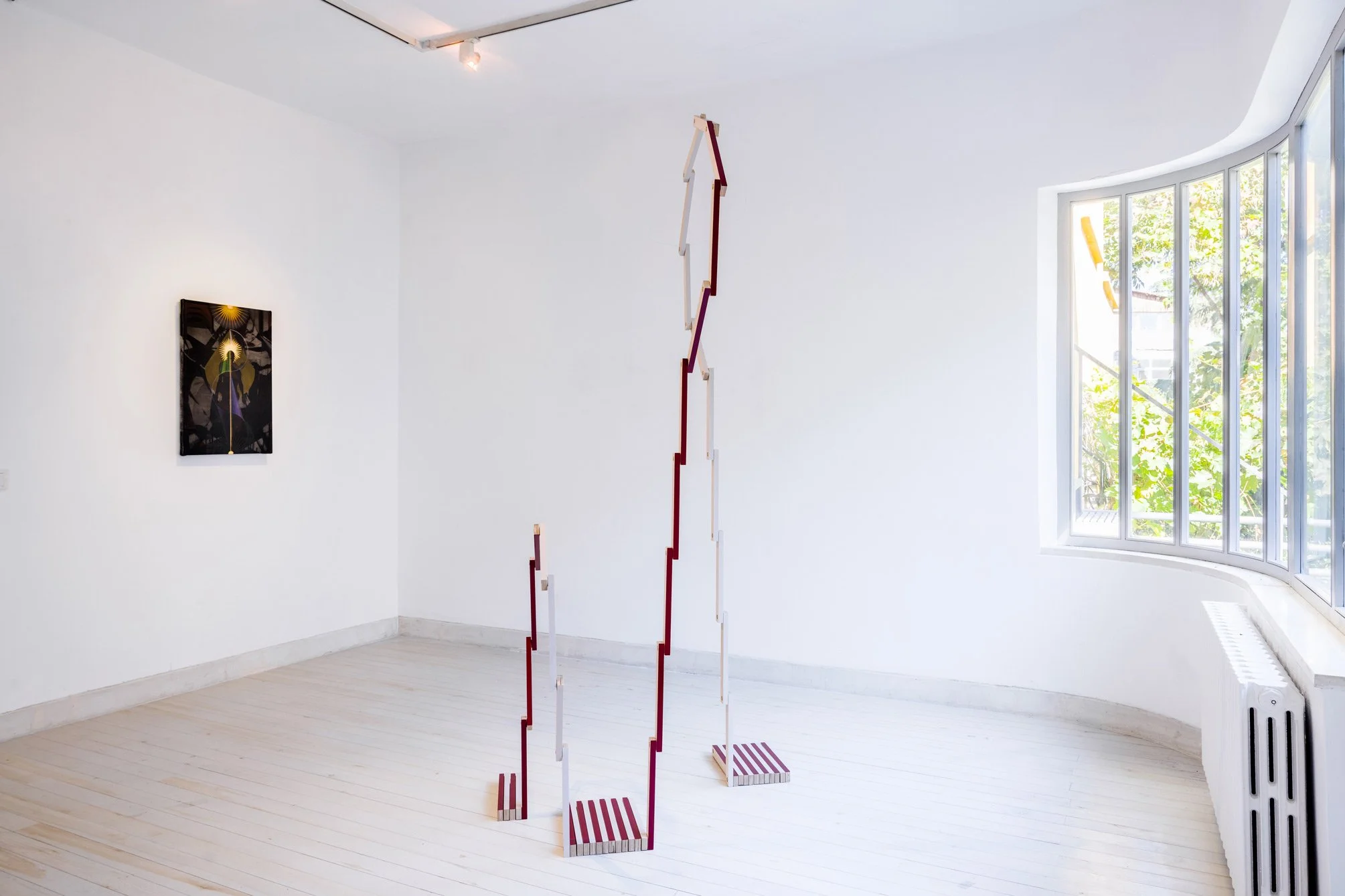
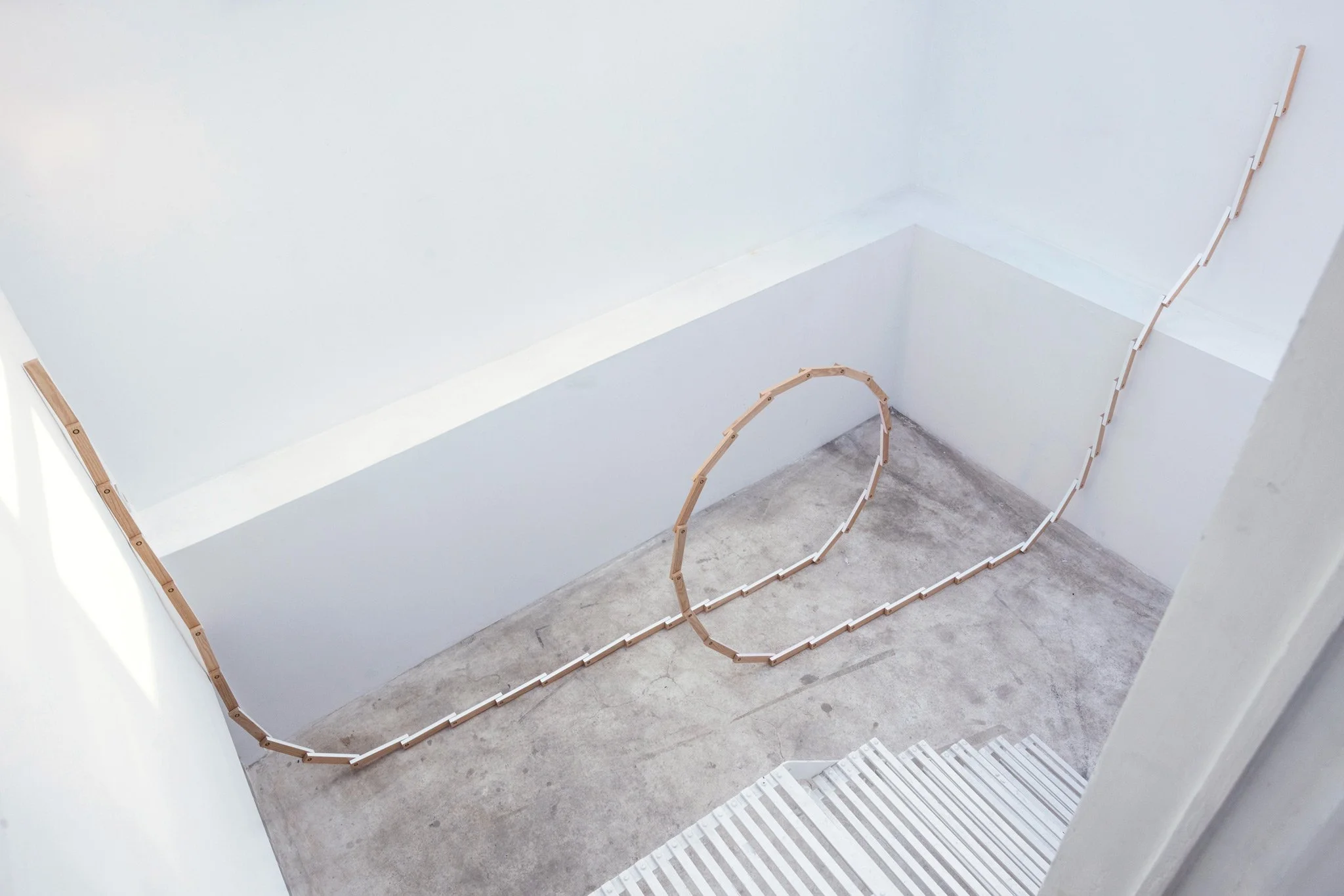
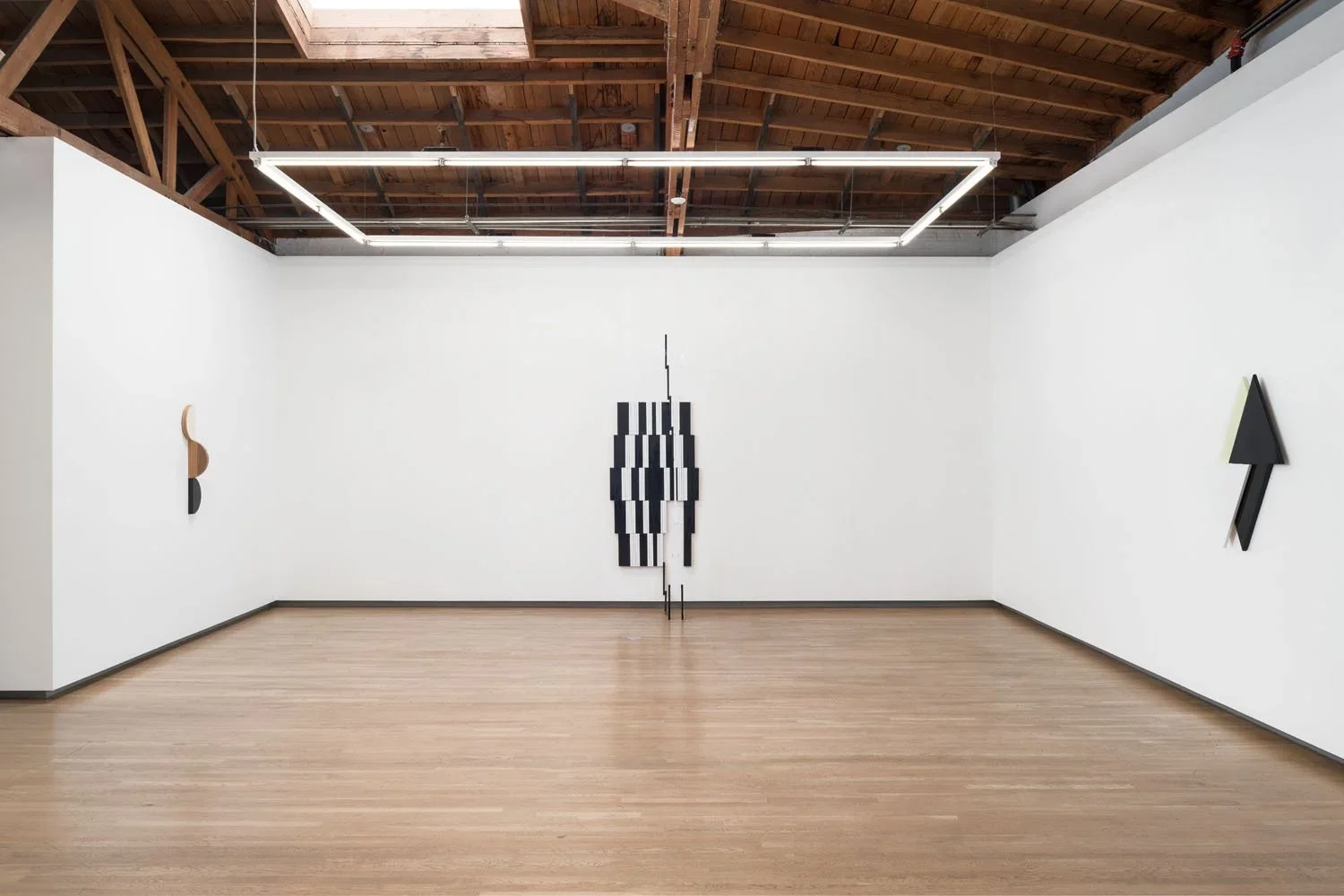
Israel’s practice both engages with and challenges the idea of sculpture as a static object. Experimenting with color, form, and kinetic ability, his works are embedded with the possibility of change and a refusal to maintain a fixed shape or scale. In W.A.L.L., the artist presents three distinct parts of his practice: wall sculptures with sliding elements, folding structures, and semi-circular forms. While they appear to be industrially fabricated, each sculpture is the result of a painstaking process of hand-cutting, gluing, laminating, and woodworking of baltic birch plywood and medium density fiberboard or MDF. The final works play a game of visual deception as the handmade simulates the industrially fabricated and forms oscillate between pure abstraction and veiled forms of representation.
In Israel’s geometric wall sculptures, the works expand, shift, and slide in various directions. As the components move, dark pigments contrast with subtle colors to reveal a surprising glow once hidden within the object’s interior space. Reminiscent of sacred geometry, the sculptures imagine the possibility of infinite division and reformation. The Unfolding Objects series consists of birchwood hinged together to create a mass that unfolds from the wall, draping out into the space toward the floor or extending upwards to tower over the viewer. An optical illusion through color and patterning deepens the way the work occupies space, creating a figure and ground confusion and simulating movement and flux reminiscent of Op Art. Israel’s semi-circular works, which appear to be separate objects assembled together, are actually realized from one solid piece of laminated MDF. Continuing a thread started from the artist's series, Another Sunset, in which Israel’s sculptures evoked forms that slip above and behind the horizon, these new works suggest lunar cycles and draw inspiration from astronomical events.
While Israel’s works might evoke spirituality, symbolism, sacred geometry, or science-fiction for some, at its core, Israel’s practice opposes the impulse to be identified or named. Rather than embodying an ideology or persuasive conceptual meaning, the works aim to be autonomous objects that are self-referential to their making and construct. His series evolved from previous bodies of work, further distancing themselves from the genesis and expression of a particular ideology. The artist shares, “In my practice, I try to build a system that generates objects—like creating a vocabulary and language, and then operating in that language. I am trying to create a world while searching for meaning…. It sounds a bit mystical, but it’s not. It’s very practical.” Through seemingly minimalist shapes and forms, Israel’s works invite intrigue, opening up moments of possibility, dynamism, and wonder.
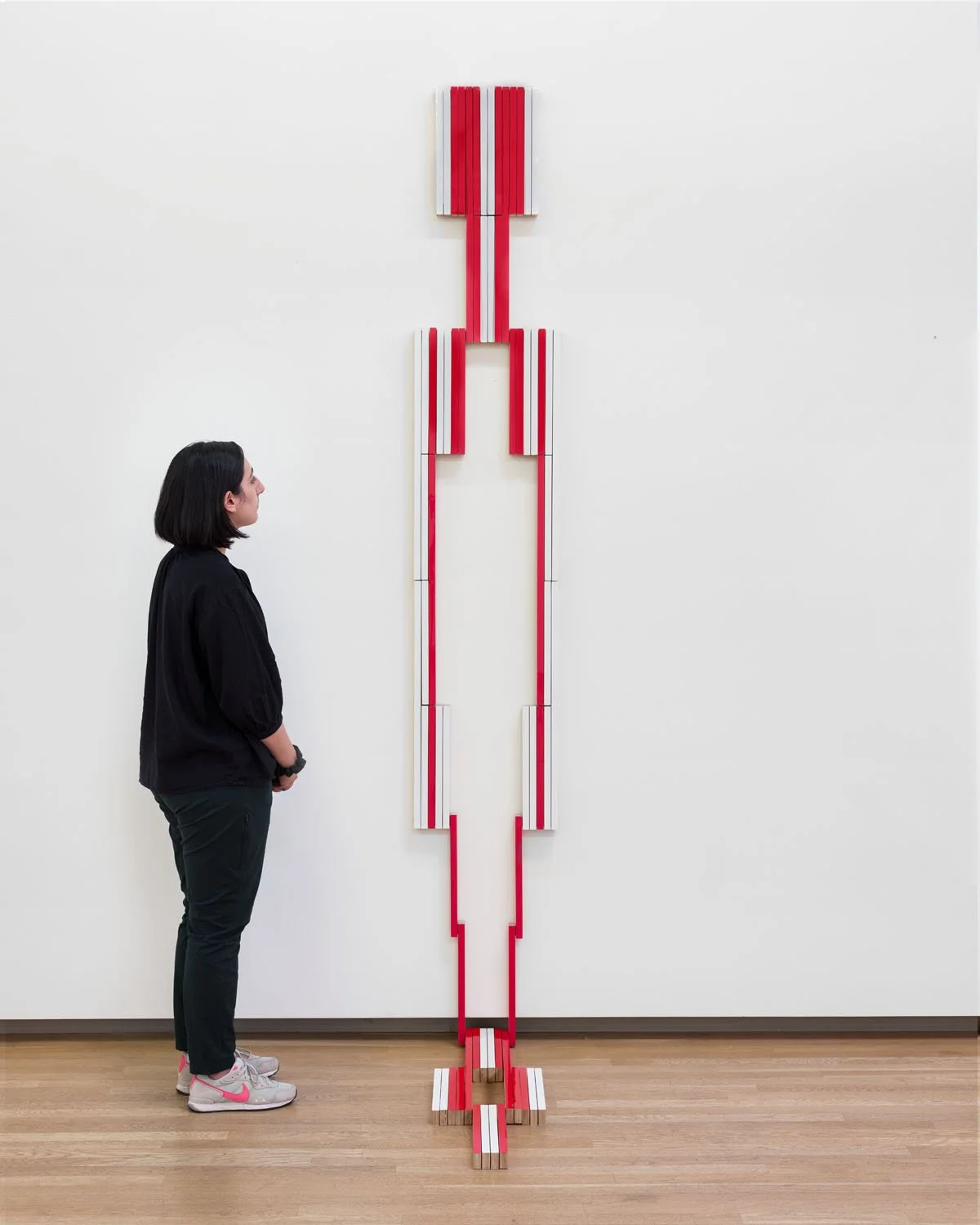
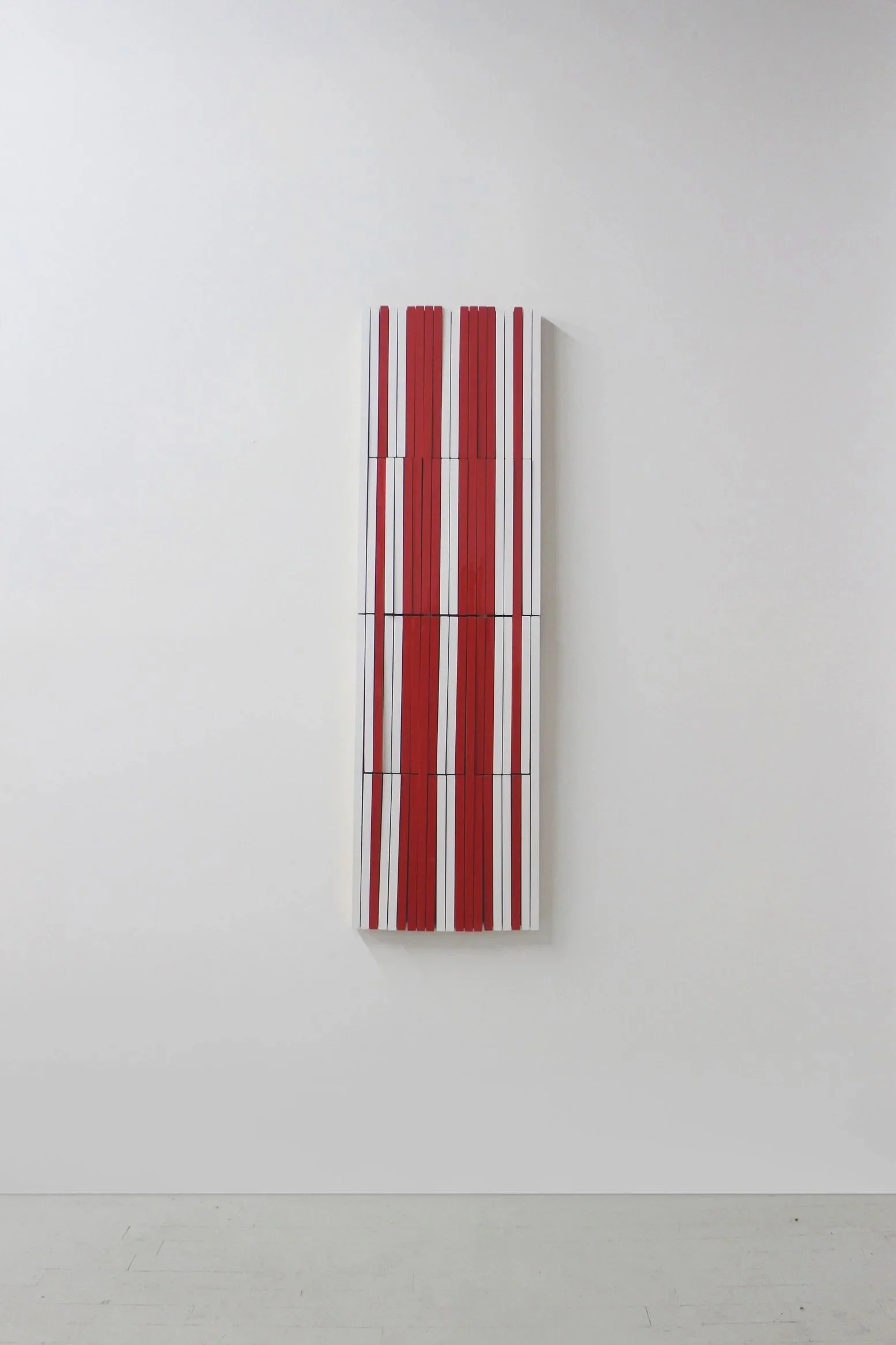
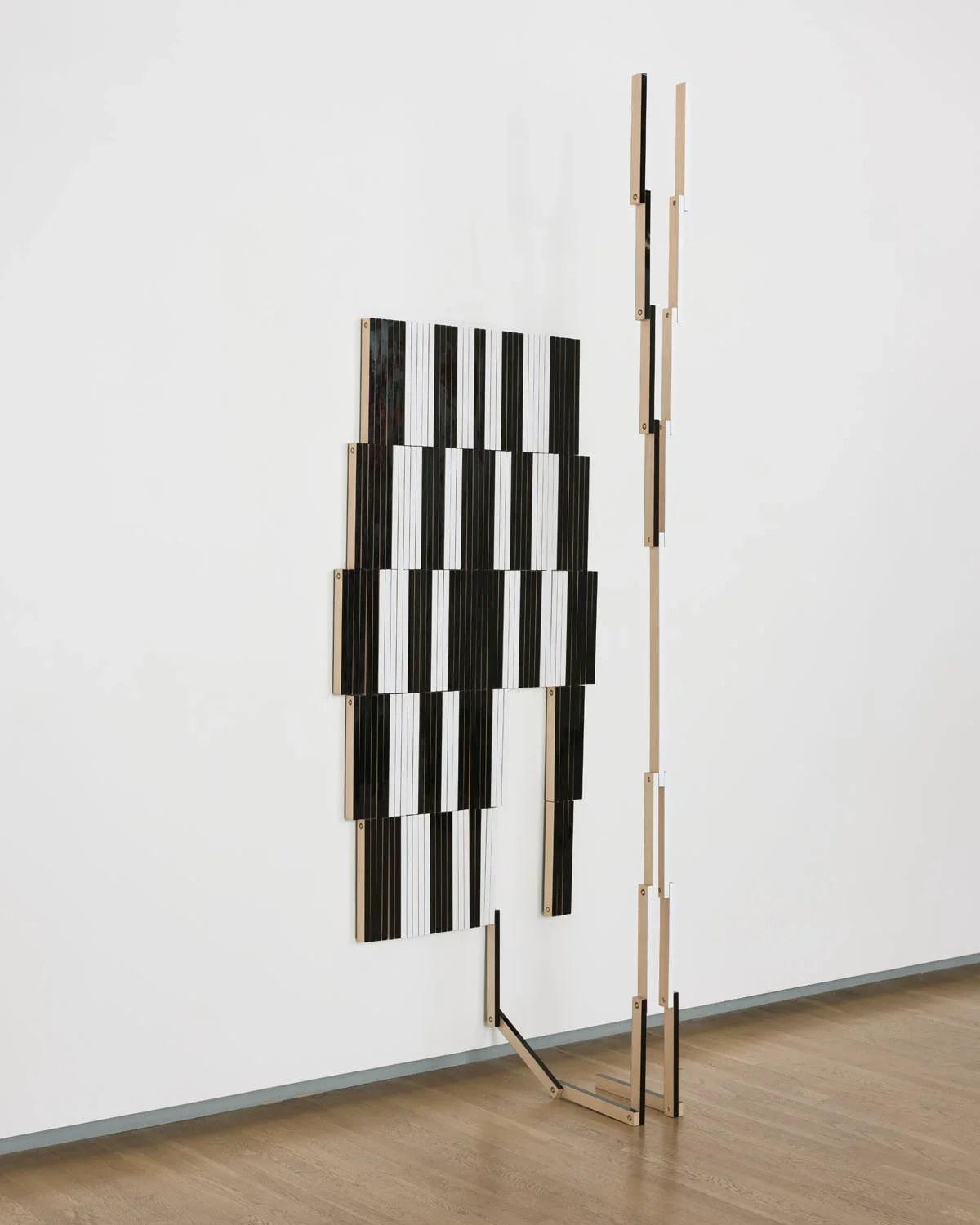
Source:
W.A.L.L. (Wooden Arrangeable Linear Lamellations). Baltic Birch, PVC and brass hardware, installation view at Nazarian / Curcio, L.A.
Photos curtesy of the gallery.
Text: https://nazariancurcio.com/exhibitions/48-reuven-israel-w.a.l.l.-wooden-arrangeable-linear-lamellations/
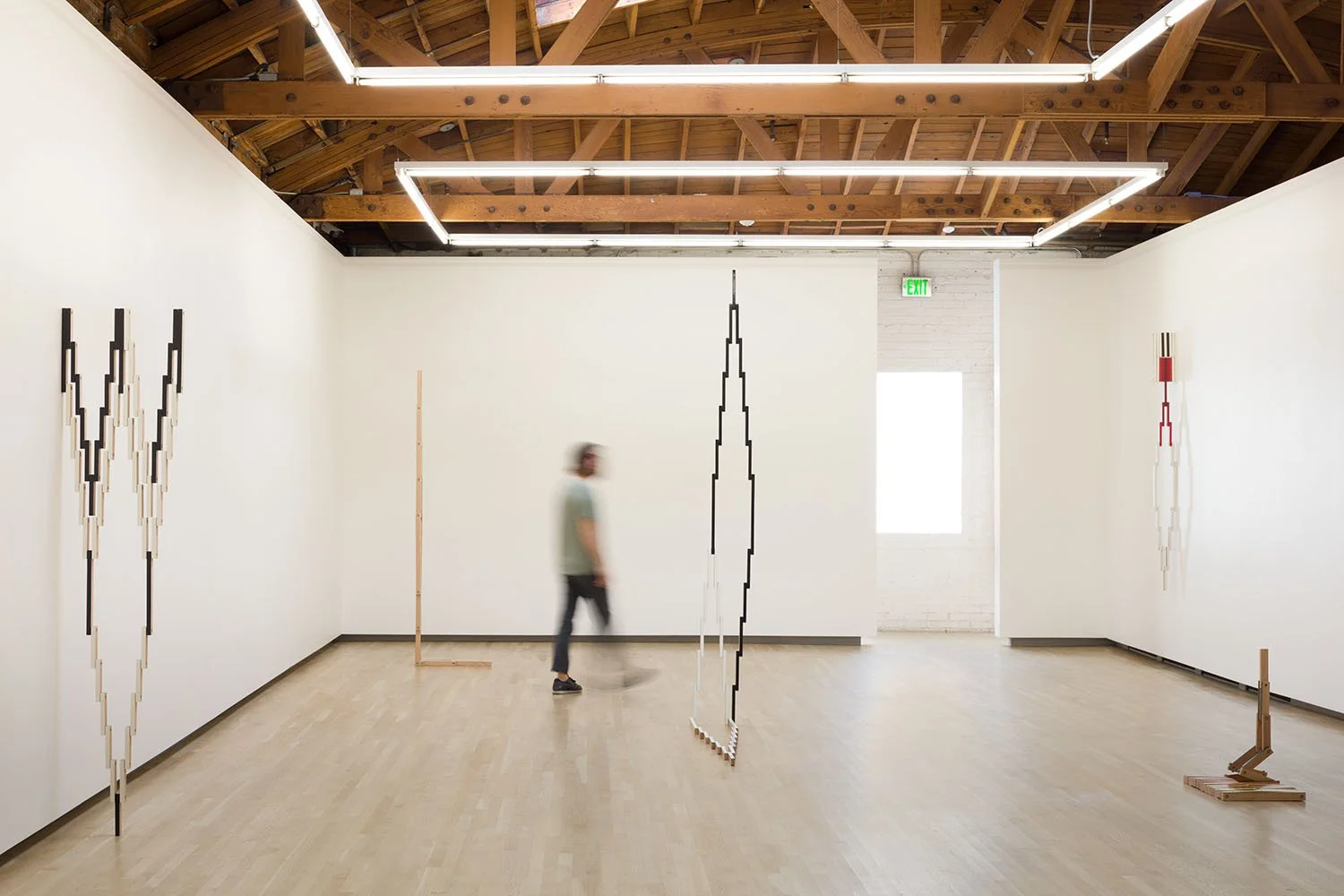
In Four Acts
November 3, 2018 - December 20, 2018
Nazarian / Curcio, L.A.
In Four Acts features a series of new works that occupy the floor and walls of the gallery. Each sculpture originates in a flat, compact state, but is modular and has the potential to expand to form multiple variations of itself.
The exhibition title refers to the dynamic state of the exhibition. During the course of the show, the works gradually unfold from minimal configurations into more elaborate adaptations. Each sculpture will change four times over the course of the exhibition, with each modification resulting in a new visual landscape.
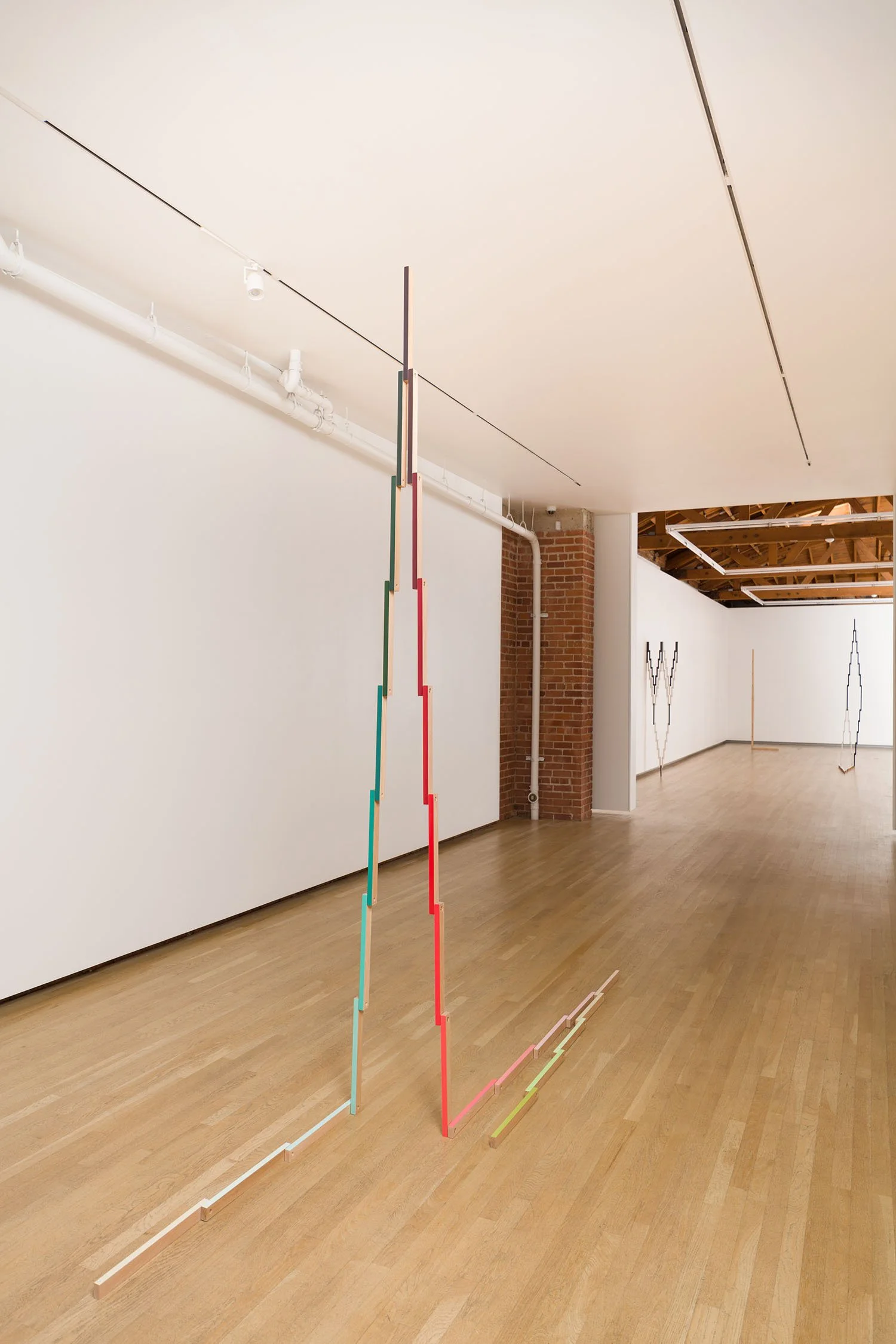
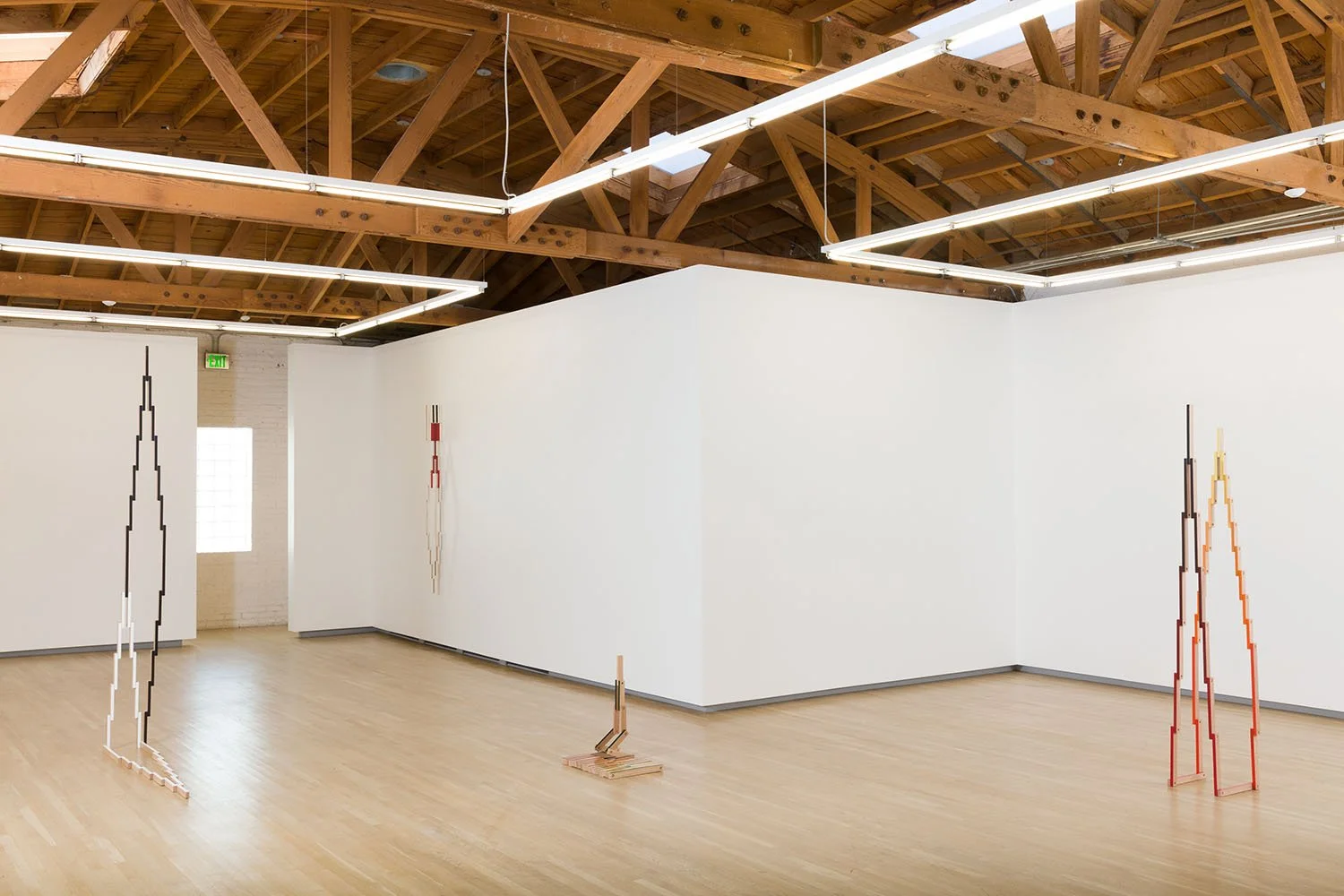
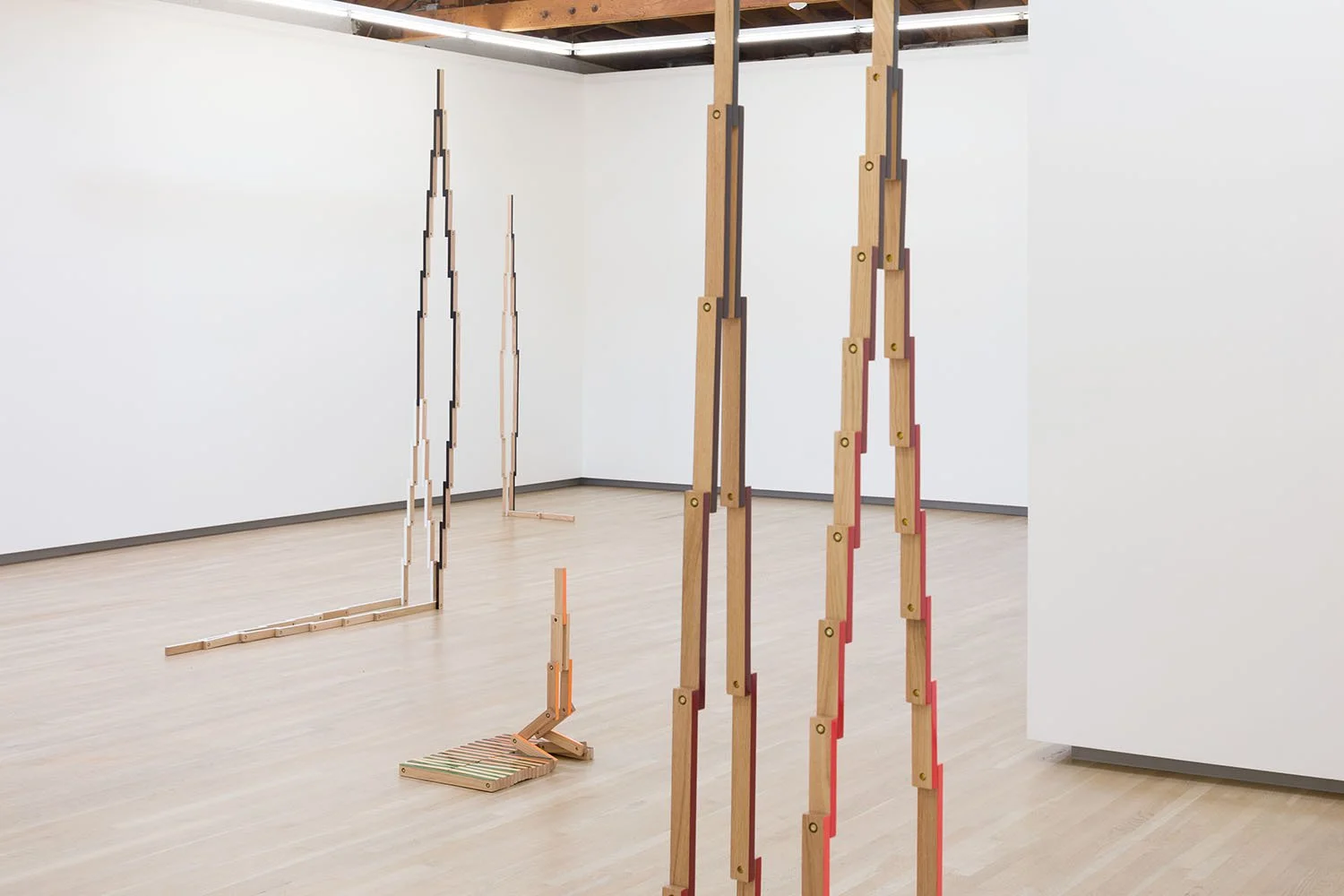
In Four Acts, 2018. Baltic Birch, PVC and brass hardware, installation view at Nazarian / Curcio, L.A.
Photos curtesy of the gallery.
Offshoot
November 29, 2018- January 31, 2019
Braverman Gallery, Tel Aviv
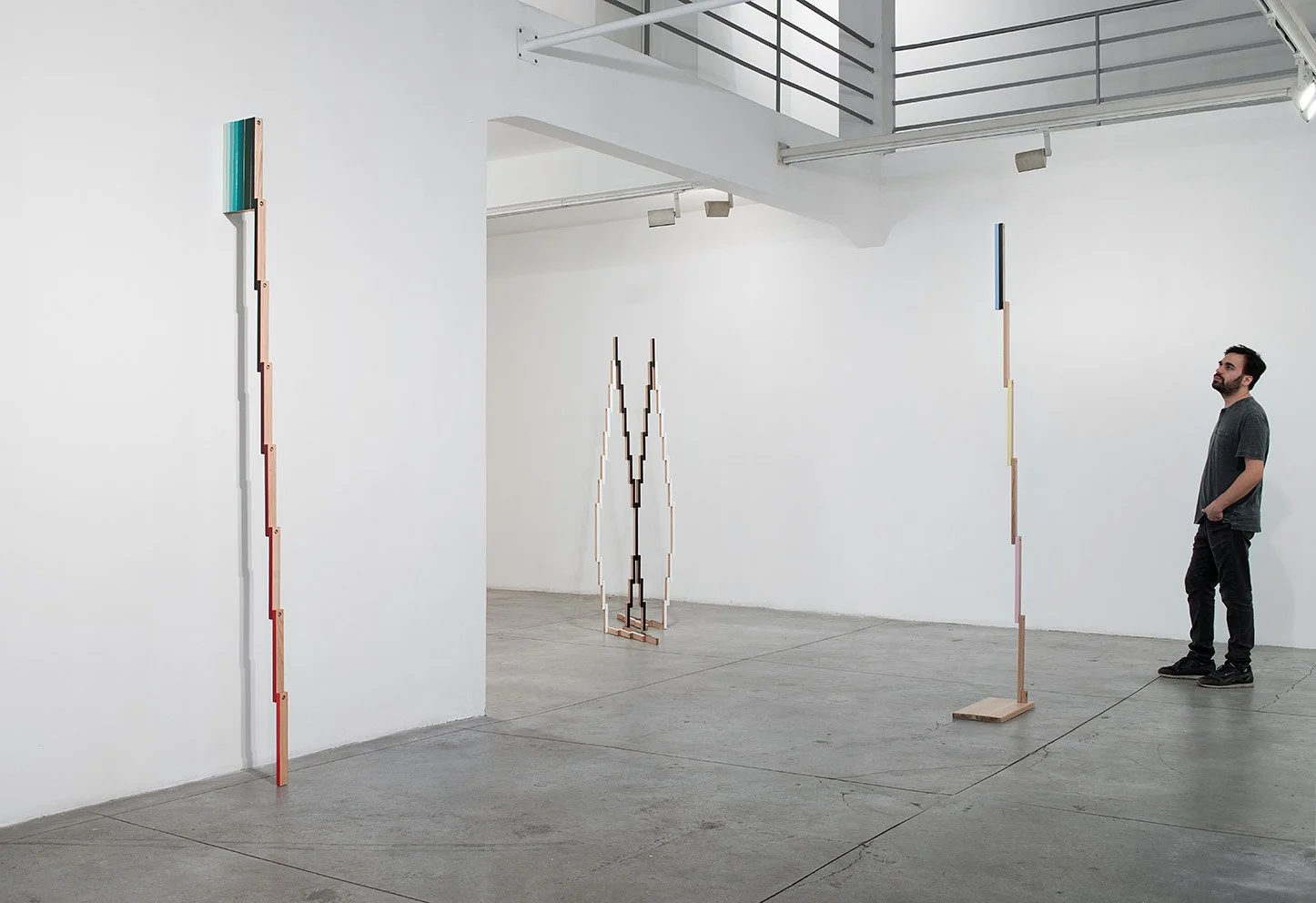
The exhibition "Offshoot" features a new series of wooden artworks sweeping across the expanse of the gallery's floor and walls. Each sculpture is inherently modular, originating from a flat, compact state that harbors the potential to expand and unfurl into manifold variations of itself. Assembled from distinct segments of oak, the surface of each piece is meticulously finished with paint and varnish, culminating in a vibrant chromatic spectrum. As the viewer navigates through the space, the surrounding elements visually shift—appearing to recede or project, flat yet profoundly three-dimensional, evoking forms that are simultaneously familiar and distinctly alien.
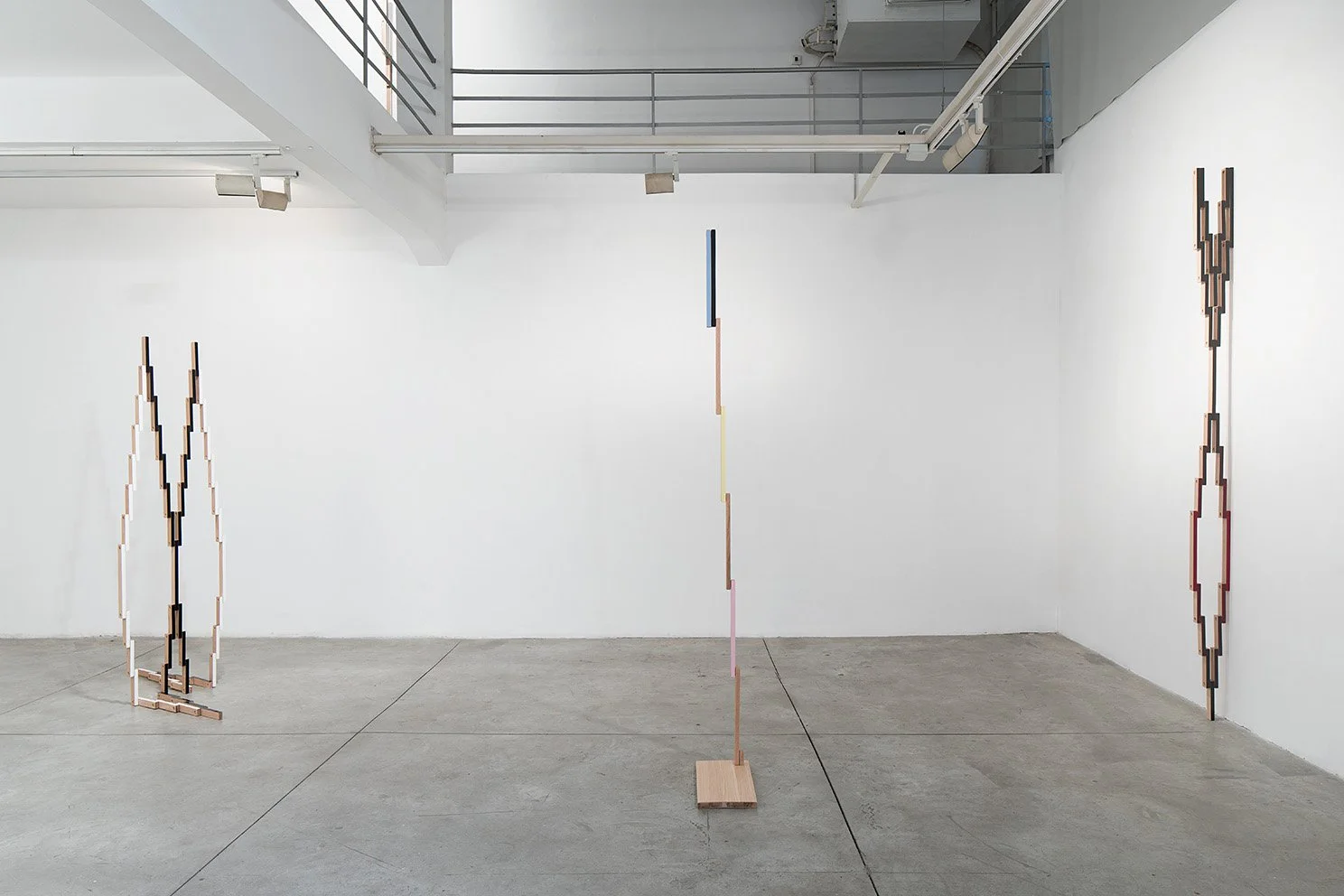
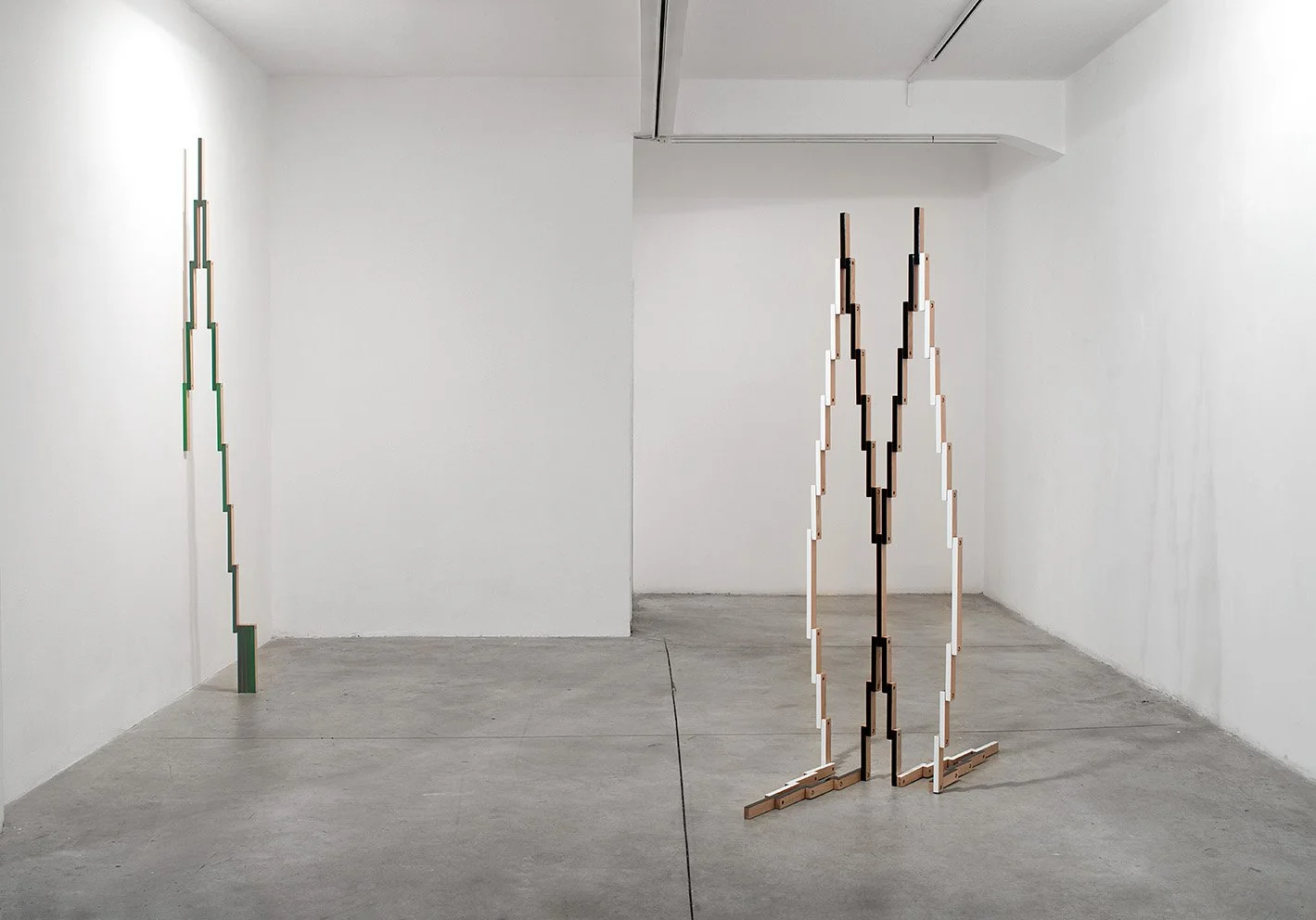
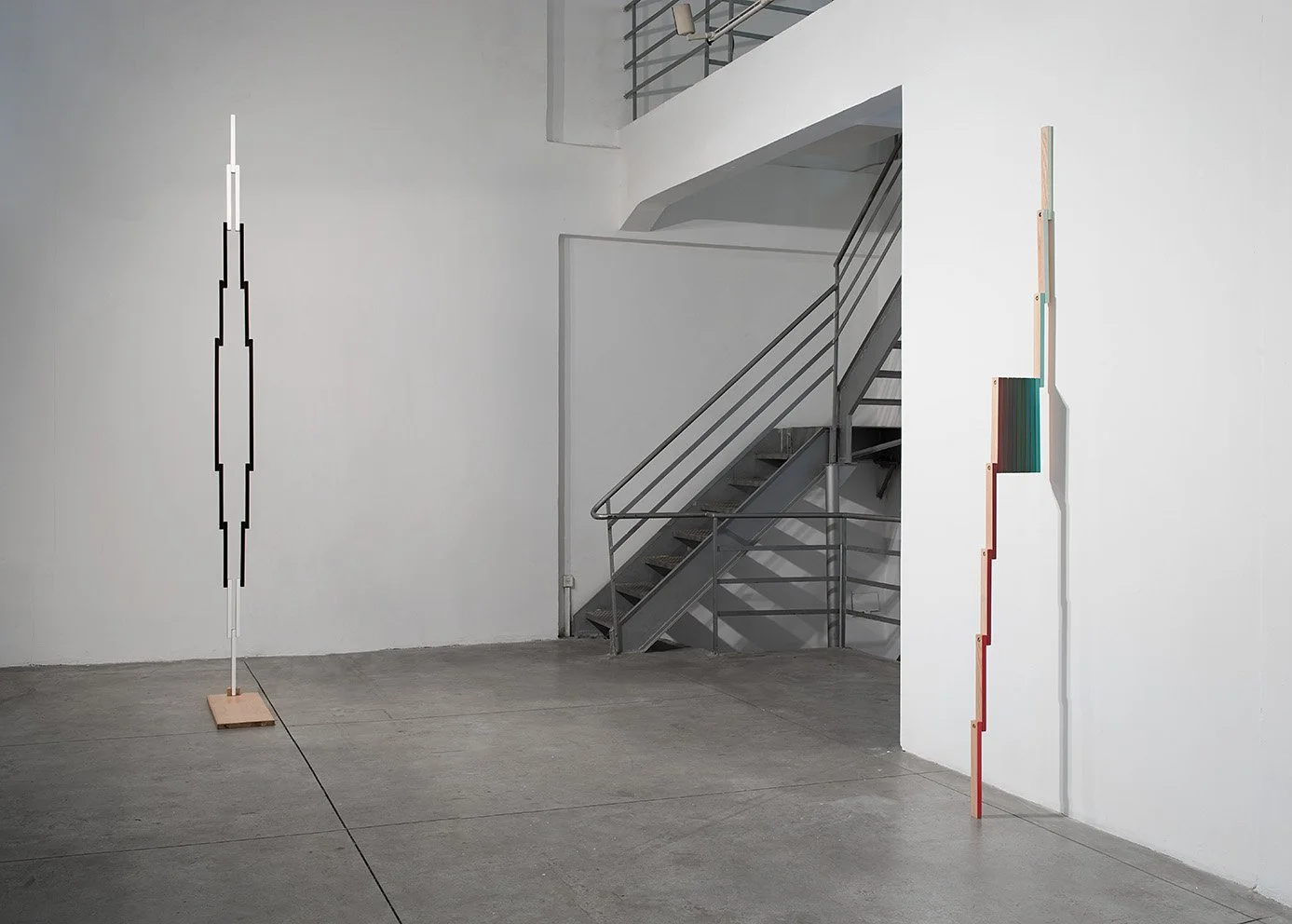
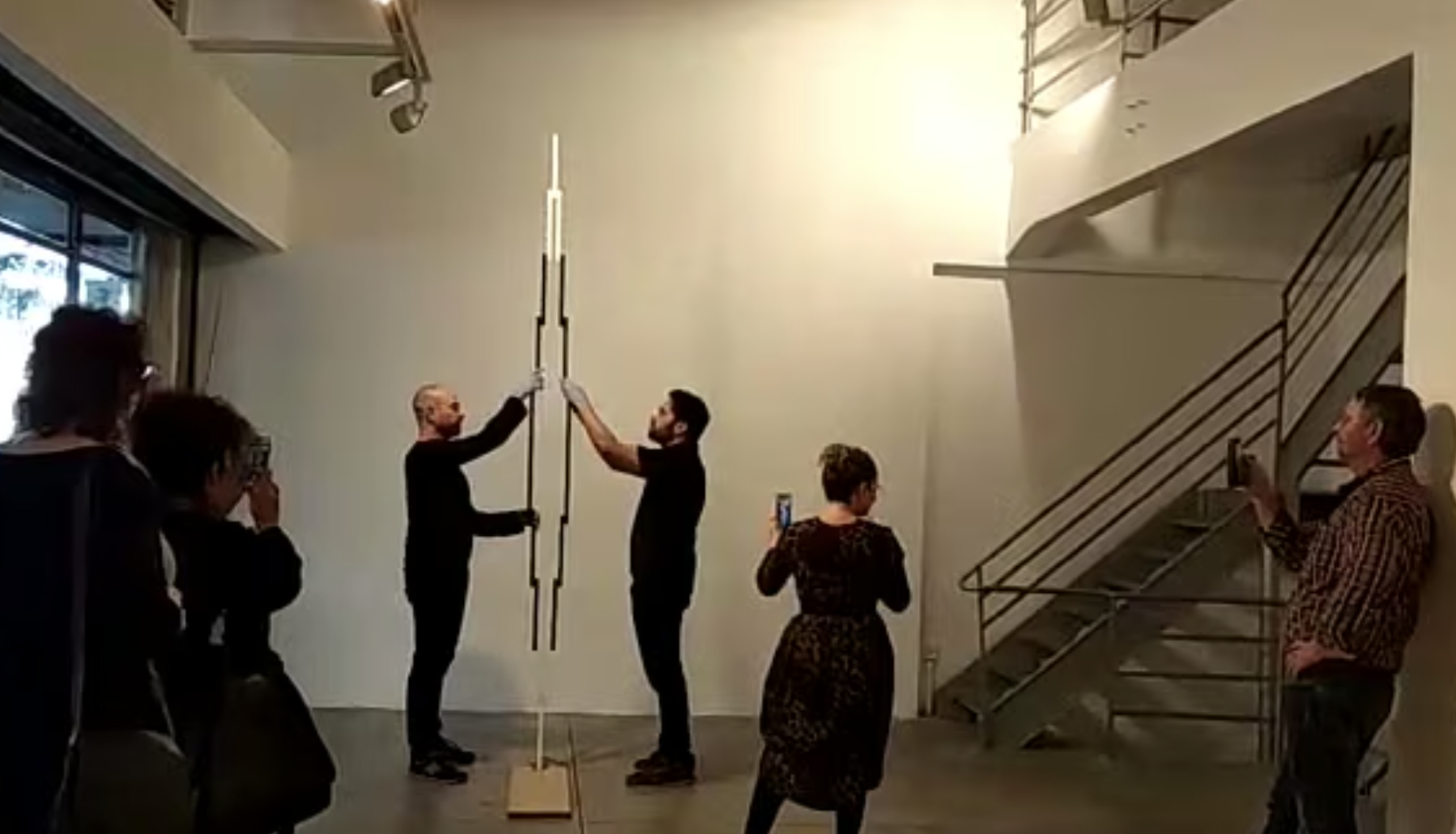
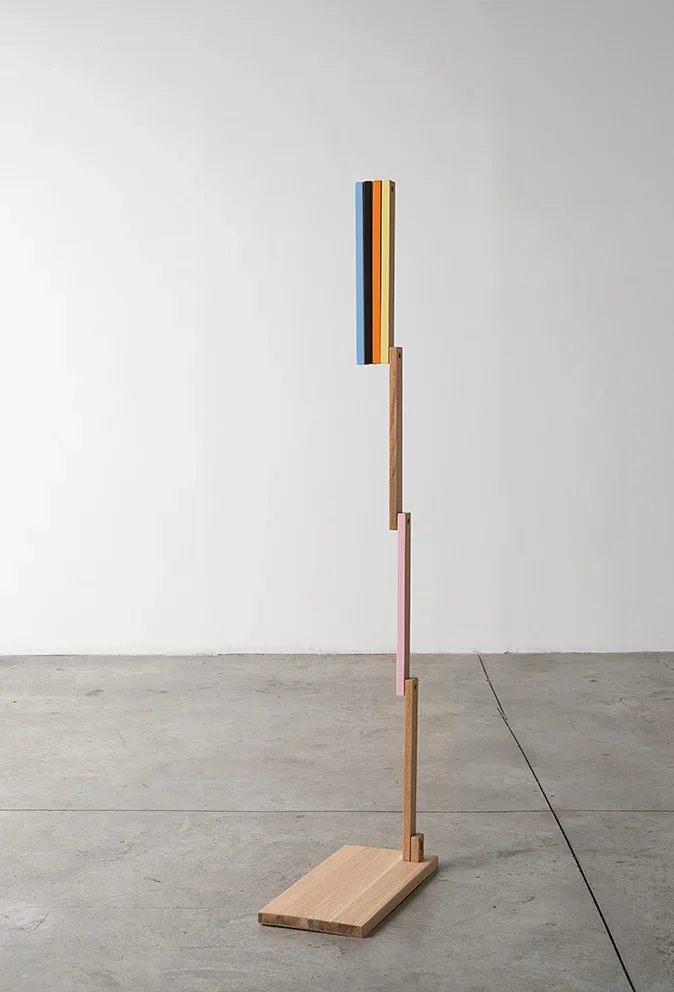
Offshoot, 2019.
Baltic Birch, PVC and brass hardware, installation view at Braverman Gallery.
Performance video curtesy of the gallery.
Photos by Elad Sarig
Untitled Folding Object 174A, 2022
November 29, 2022 – December 3, 2022
SARAHCROWN Gallery, New York
at UNTITLED, Miami Beach
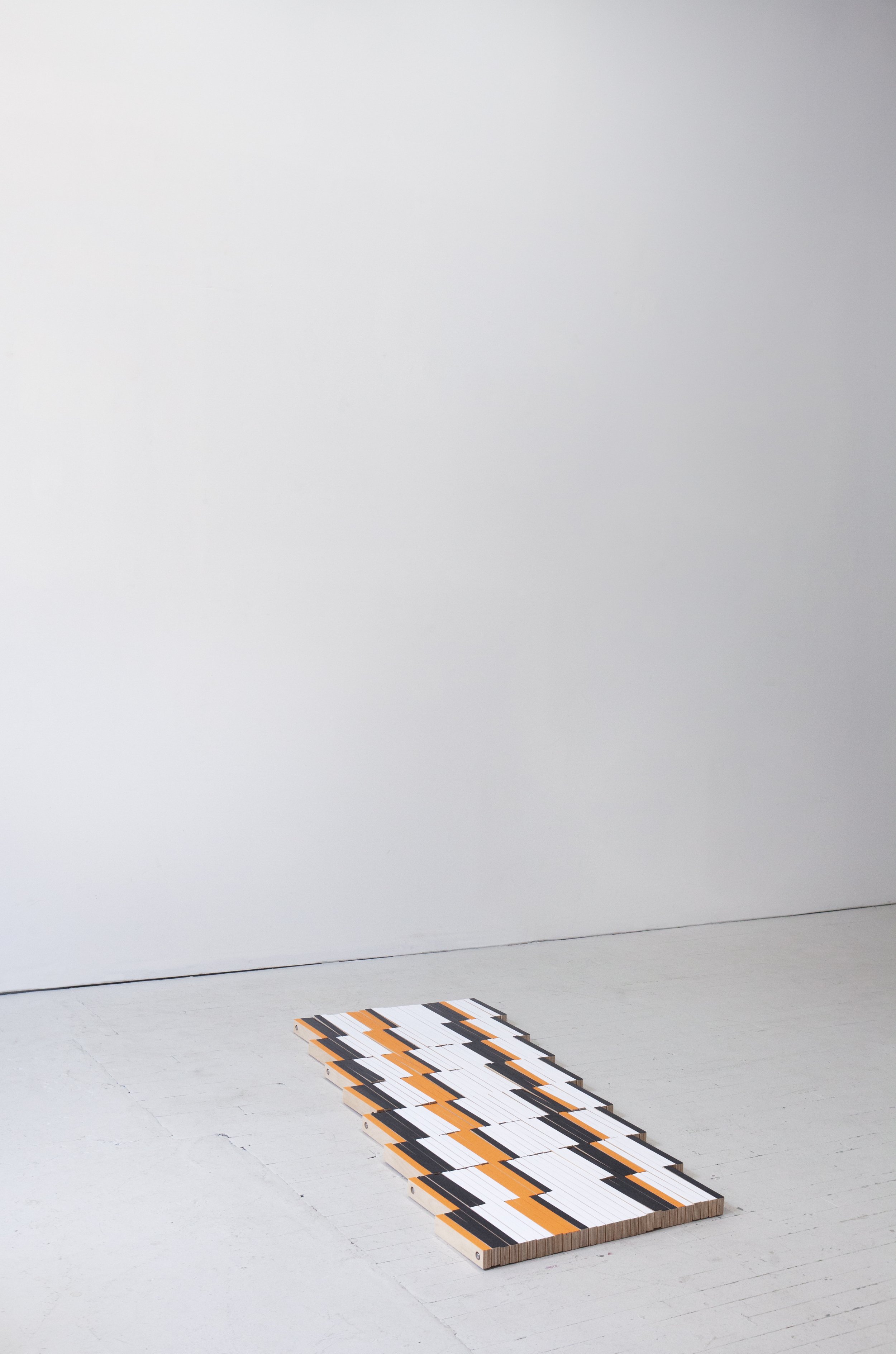
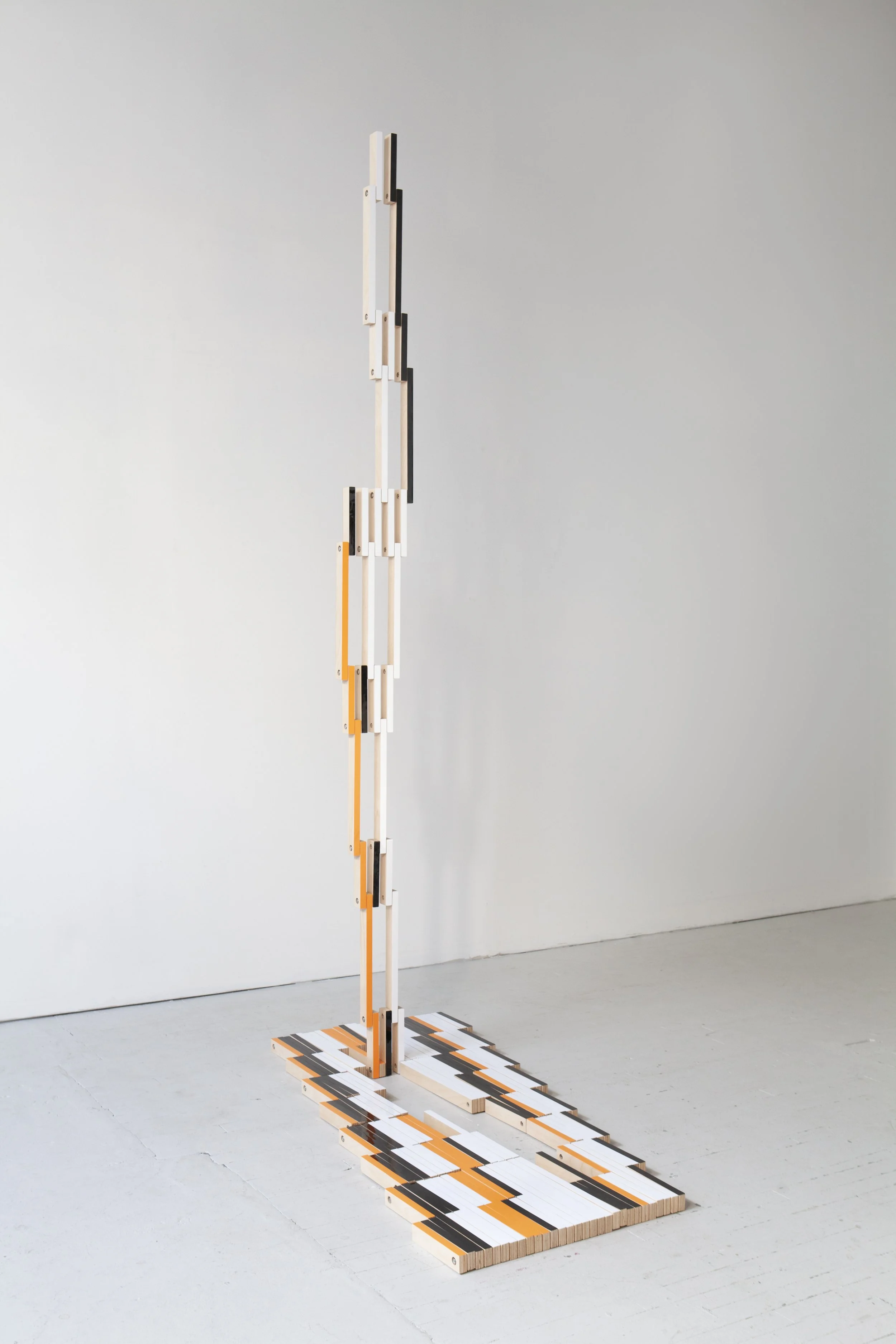
Untitled Folding Object 174A, 2022. Open and Closed. PVC on Baltic Birch and stainless steel hardware.
Photos by Nuria Rius